
Cape provinces sign cross-boundary regulatory pact to accelerate Koruson wind cluster
The provincial administrations of the Eastern Cape and Northern Cape have executed a formal cooperative memorandum to eliminate structural permitting friction across the 940 MW Koruson clean energy corridor. The pact overrides municipal boundaries to create South Africa’s first unified administrative zone for trans-boundary private utility grids.
Provincial border friction has long disrupted independent power projects attempting to wheel utility-scale electricity through fragmented local networks. The collaborative memorandum signed at the Phezukomoya wind farm in Noupoort establishes a singular legal pathway to synchronise spatial planning, land use approvals, and environmental review timelines between the two regional governments. The strategy shifts the regulatory burden away from private developers by creating a permanent interprovincial oversight committee to manage cross-border transmission networks directly.
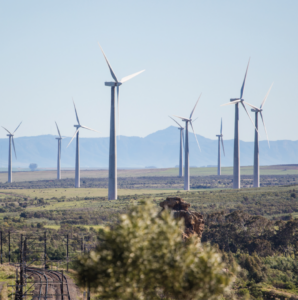
The underlying geographic challenge stems from the physical footprint of the infrastructure assets. The cluster spans the administrative dividing line, placing generation assets and substation units under competing municipal frameworks. The multi-phase infrastructure development combines two primary project pipelines managed by international syndicates.
The first asset configuration is the Koruson 1 wind fleet, which is a 420 MW generation network managed by France-based EDF Power Solutions. This phase incorporates the San Kraal, Phezukomoya, and Coleskop installations, routing power through a shared 1.5 GW main transmission station built outside Middelburg to feed the primary national grid.
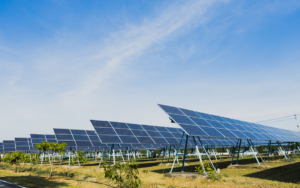
The second tranche is the Koruson 2 hybrid complex, which is a 520 MW private supply grid operated by Envusa Energy, a joint venture between Anglo American and EDF Power Solutions. The portfolio distributes zero-carbon electricity from the Umsobomvu and Hartebeesthoek wind farms alongside the 240 MW Mooi Plaats solar plant.
The administrative framework de-risks private wheeling operations by guaranteeing structured rights-of-way for the high-voltage lines connecting these generation fields to industrial buyers. Envusa Energy already routes power through a newly commissioned 400 kV main transmission substation to supply ten heavy industrial mining complexes under fixed 20-year corporate offtake terms.
“Success cannot be measured only in megawatts generated or infrastructure installed,” Eastern Cape Economic Development MEC Nonkqubela Pieters stated at the formal execution. “The agreement will enable closer coordination with municipalities to ensure trans-boundary investments yield verified community capacity gains rather than prolonged local planning disputes.”
The joint initiative also provides a commercial framework to consolidate private corporate social responsibility funding. Rather than distributing small-scale local aid via isolated municipal offices, EDF Power Solutions and Envusa Energy will pool capital into a single Koruson Trust. The consolidated financing will target agricultural enterprise development, livestock development programmes for emerging farmers, and localised healthcare infrastructure across the border region.
Northern Cape Office of the Premier Director-General Advocate Justice Bekebeke confirmed the joint pipeline directly supports state energy security targets by expanding stable private grid links. The harmonised permitting structure serves as an active template for future trans-boundary infrastructure lines as private miners aggressively expand clean captive power hubs across South Africa.