EXCLUSIVE: Nomfundo Maseti takes NERSA into South Africa’s competitive power market
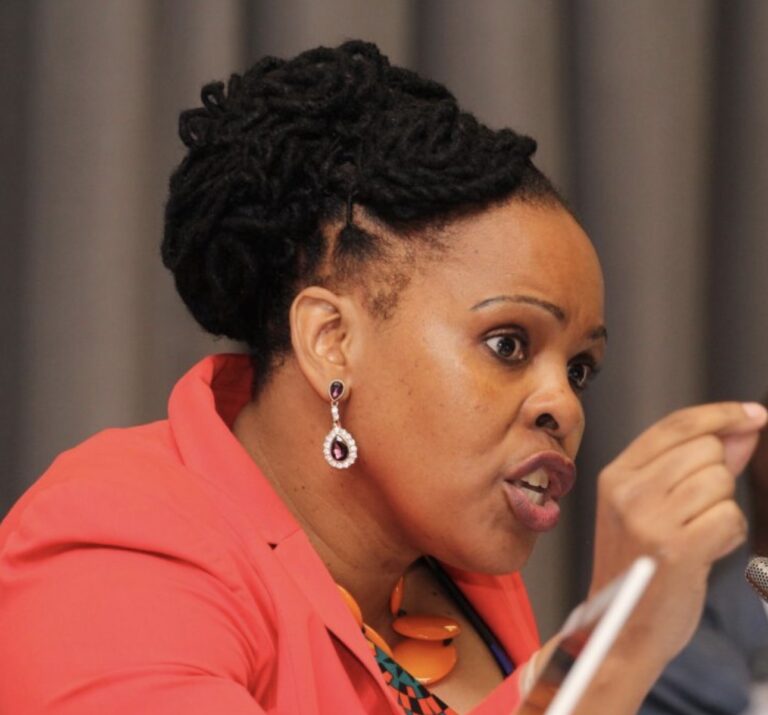
Nomfundo Maseti, Acting Chief Executive Officer of the National Energy Regulator of South Africa, on finishing the rules South Africa’s wholesale electricity market needs before it opens in April 2027. In her second week in the role, she tells ENN how NERSA will earn investors’ trust and why gas-to-power should anchor a wider gas market. Her message is continuity with purpose: stable leadership, credible decisions and a regulator equipped for the market ahead.
South Africa’s wholesale electricity market has opened its trading platform to 85 external entities for testing ahead of its launch in April 2027, according to Engineering News, and finishing the rules that market will run on is among the priorities Nomfundo Maseti has set out since she took charge of the National Energy Regulator of South Africa (NERSA) on 25 October.
Keeping NERSA’s licensing and tariff decisions on time and predictable is her immediate priority, she said in written answers to ENN, “because delays and surprises raise the cost of doing business for everyone in the sector”, and the next is to position NERSA as the regulator of a competitive, multi-player electricity market. With the National Transmission Company South Africa (NTCSA) legally separated from Eskom and holding the market operator licence, the gap now lies in the rulebook. “The rules and code that will make the South African Wholesale Electricity Market (SAWEM) function, however, are not yet in place,” she said. “NERSA’s task is to close the gaps quickly and coherently.” “The transition must not interrupt the regulator’s work. Continuity builds confidence; consistency earns credibility,” she added.
When the amended Electricity Regulation Act took effect in January 2025, Maseti was responsible for electricity regulation at NERSA in addition to her gas portfolio, and she told ENN that she used that period to shorten the regulator’s licensing timelines and to set up the Electricity Market Advisory Forum, which brings economists and competition law specialists from industry and universities into the reform. Her team also drew up the grid capacity allocation rules that govern access to the network, since approved, and NERSA granted NTCSA its market operator licence.
The electricity trading rules, which she was close to finalising when she handed the electricity portfolio on, now sit with her as chief executive, together with the Market Code they must align with on balancing responsibility, metering, loss allocation and the treatment of credits for wheeled energy. Vesting contracts are next on her list, a framework to manage the move to competitive prices while respecting the contracts already in place, which she likened to the contracts for difference used in the UK and Europe. She expects the rules for independent transmission projects and the tariff price path to be finalised before the end of the financial year in March 2027. With SAWEM scheduled to launch in 2027, she wants readiness tested across the full regulatory chain: aligned rules, clear accountability, enforceable market-conduct standards and operational coordination with NTCSA. “Market opening is a date; regulatory readiness is a discipline.”
Trust, she said, “depends first on fair and transparent network access”, and while non-discriminatory access is written into the law, NERSA “needs to translate the de jure intentions into de facto implementation”. In practice that means connection queues managed by published rules and wheeling charges applied consistently across Eskom and municipal networks, and the amended law now obliges municipalities to facilitate wheeling in their supply areas, “which is new territory for many of them”.
Market surveillance draws most directly on her own training as an economist and qualified competition law practitioner. NERSA will need the IT systems and cyber security to watch the market, she said, along with engineers able to examine dispatch scheduling and access and economists to police market power abuse and collusion, and she wants a joint working forum with South Africa’s competition authorities for handling investigations. Investors want predictability and customers want fairness, she said, and “a regulator that is consistent, transparent about its reasoning and willing to enforce the rules can deliver both”. This means building a dedicated, multidisciplinary surveillance capability, supported by secure data access, analytical tools, specialist skills and clear escalation pathways for suspected market abuse. “We must be ready to detect problems early, act lawfully and protect confidence in the market from day one.”
On prices, NERSA’s task is to make sure customers pay “for the efficient cost of service, no more and no less”, with vulnerable households protected through well-targeted Free Basic Electricity and lifeline support that is “funded visibly, rather than through hidden cross-subsidies that distort prices for productive users”. Draft rules setting performance indicators for municipal distribution networks, published in May 2026, should be concluded by the end of the current financial year.
Gas is the industry Maseti has regulated as a full-time member of NERSA, and supplies from Mozambique’s Pande and Temane fields are expected to decline after 2028, threatening industrial users that, according to the Industrial Gas Users Association of Southern Africa, account for about 8% of GDP and 75,000 direct jobs. “South Africa needs a bankable, integrated gas market, not simply gas supply or gas-fired power procurement,” she said, adding that bidders in the first gas-to-power procurement round could not demonstrate secure supply. “Gas-to-power should anchor the broader gas market, not be its sole objective. It can support initial infrastructure investment, while demand from industrial, petrochemical, commercial, mining and potentially transport users strengthens long-term viability and reduces reliance on a single off-taker.” NERSA’s Gas Dialogues in July recommended a Gas Economy Execution Forum that would bring government, regulators, developers, financiers and major users together to coordinate the response to what she called “the impending gas cliff”. She stressed that NERSA is actively monitoring and managing the regulatory risks of the gas cliff, including supply continuity, pricing and affordability, infrastructure access and the timing of new supply. Its role is to identify regulatory obstacles early, coordinate within its mandate and provide credible advice to decision-makers. “Energy security cannot be left to the last minute; we must preserve options before the cliff arrives.”
Industrial users stand to gain most immediately from the reforms, in her view, since wheeling and bilateral trading let them contract directly for “competitively priced, often renewable, electricity” as exporters face carbon costs under the EU’s Carbon Border Adjustment Mechanism. Over time, licensed traders and aggregators could extend similar offers to small and medium enterprises through pooled renewable energy contracts.
Inside NERSA, her first week went on assembling the finance team for a turnaround strategy for an organisation whose mandate has outgrown its resources, and on a litigation strategy she wrote herself and presented to a joint sitting of the finance committee and the audit and risk committee. “I lead from the front,” she said, describing a leader who shows her team how a project is done before handing it over and who expects everyone to speak in meetings. “I tell them that you can’t just come to a meeting and not have anything to say. I do know that you do have something to say, so trust yourself and say it.” She regards the turnaround as a programme to protect institutional continuity, rebuild credibility and strengthen the capacity required for SAWEM and gas-market oversight. That includes prioritising scarce resources, retaining critical expertise and reinforcing decision quality, governance and accountability. “A credible regulator is not measured only by the rules it writes, but by its ability to implement and enforce them.”