African Union establishes technical oversight committee to launch continental power market coupling
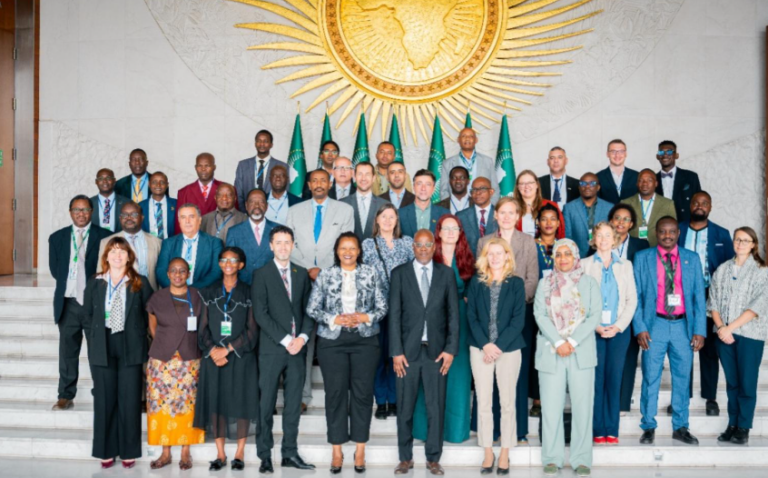
The African Union Commission has inaugurated the High-Level Technical Oversight Committee for the African Single Electricity Market after a three-day session in Addis Ababa. Backed by regional power pools and development finance institutions, the structural body transitions the continental energy master plan from political architecture toward cross-border market rules.
At the African Union headquarters in Ethiopia, international energy planners have activated the implementation phase of the world’s largest geographical power integration blueprint. The establishment of the oversight committee formalises the governance frameworks and operational manuals required to execute commercial electricity trading across multiple jurisdictions. For decades, infrastructure developers and independent power producers faced extreme capital constraints due to fragmented national off-taker models and isolated regulatory regimes. This structural capitalisation strategy introduces unified market clearing and cross-border transmission rules to absorb localised generation variances.
The continental master plan establishes specialised technical working groups to direct regulatory harmonisation, electricity trading settlement, and market coupling protocols. International Energy Agency metrics track a severe domestic capacity deficit, with more than 600 million people across the continent currently lacking secure electricity access. By coupling five separate regional power pools into a singular trading block, the framework intends to flatten the regional supply curve, enabling states with high variable renewable surpluses to wheel power directly to industrial demand centres.
Project development has accelerated through a clear technical progression over the last four fiscal windows. European Union development agencies validated the underlying operational tools for the Continental Power System Master Plan, preceding the third annual market forum which gathered 200 utility executives and financiers to codify transmission access codes. By structuring the technical working groups directly after these multilateral validations, the commission provides the institutional de-risking required to crowd private infrastructure debt into cross-border interconnectors.
Parallel unbundling initiatives clearing domestic regulatory pipelines highlight a coordinated push toward open-access network operations. National energy ministries are systematically reforming legacy utility monopolies, establishing independent transmission service operators to manage third-party wheeling charges. By synchronising localised distribution grids with the centralised market operator, the structural reforms enable private concessionaires to contract directly with heavy industrial users across state borders.
Securing long-term private capital allocations for high-voltage infrastructure remains the absolute determinant of the continental market’s viability. Project sponsors must finalise unified dispute resolution mechanisms and currency convertibility hedges before institutional lenders will price regional off-taker risk. Ultimately, the capacity of the technical committee to enforce harmonised grid codes will determine whether this integrated network moves from institutional design to actual commercial power flows.
Images: African Union Commission Directorate of Infrastructure and Energy