
EXCLUSIVE: The cross-border line both governments wanted
Speaking to ENN, Gridworks Chief Executive Chris Flavin explains what made a privately financed transmission line between Kalumbila in Zambia and Kolwezi in the DRC workable, and what its 700MW of capacity will open up for Zambian power producers and traders once it carries electricity into the DRC’s Copperbelt.
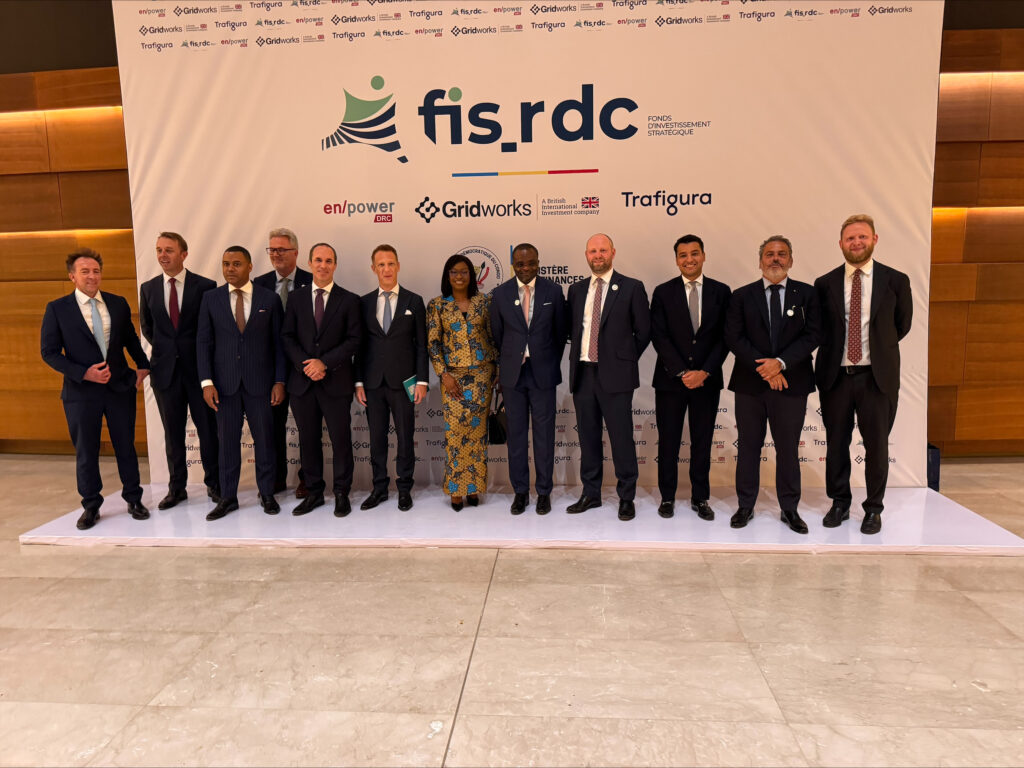
Under a Strategic Framework Agreement signed in Kinshasa on 6 October, the DRC’s Strategic Investment Fund (FIS-RDC), the Congolese developer and power trader EnPower, Trafigura and Gridworks Development Partners will jointly finance and operate a 200km high-voltage transmission line they plan to build from Kalumbila in Zambia to Kolwezi in the DRC. Construction of the Kalumbila-Kolwezi Interconnector Project (KKIP) is estimated at $300 million, and the project is the first investment FIS-RDC has announced since the fund was created in October 2025.
With a thermal capacity of 700MW, the line is designed to carry up to 550MW into the Copperbelt mining region of the DRC and will strengthen the country’s connection to the Southern African Power Pool. Gridworks, which is owned and funded by British International Investment, is the lead equity investor and majority shareholder, while Trafigura has agreed to arrange a significant share of the debt financing.
Talks are under way with Zambian entities about taking a stake in the project, and Chris Flavin has answered five questions from ENN on what made a private line across this border workable and on the role he sees for Zambia, with his answers below in full.
KKIP is described as the first privately developed and financed cross-border transmission line in Africa. What made a private cross-border line workable here?
A number of things have made the line workable. Firstly, this is a credible and bankable commercial model. KKIP doesn’t trade power itself, it earns contracted fees from long-term wheeling agreements, underpinned by PPAs with major mining offtakers, and firm power supply agreements with utilities and IPPs including ZESCO, NamPower and EDM. This is a structure that lenders and investors feel comfortable with.
Secondly, the project had eight years of patient development work behind it by EnPower before Gridworks came in (concessions and implementation agreements signed with both governments, environmental permits secured, land rights obtained). That early-stage development, something which Gridworks undertakes in most of its own projects, combined with IFC’s close involvement in reviewing and strengthening the project since 2022, gave investors real confidence.
And finally, both governments wanted this. A private cross-border line only works if both states see it as mutually beneficial. In this case, Zambia gets a new export market for its power producers, and the DRC gets access to capacity it urgently needs. That alignment is what made it work as a privately financed transaction, rather than requiring state-to-state financing.
The line has a thermal capacity of 700MW, with up to 550MW to be imported into the DRC’s Copperbelt. What does it open up for Zambian power producers and licensed traders?
Licensed Zambian power producers and traders gain a new, contracted export route into a market with severe, structural undersupply. The DRC’s Copperbelt region has a power deficit estimated at more than 1GW and growing, so the demand side is not in question.
For traders, KKIP provides the physical wheeling capacity to actually deliver power they’ve sold under PPAs. Without that physical infrastructure in place, cross-border power sales often struggle without a route to market. For producers, it creates a credible long-term offtake case that can support new generation investment in Zambia itself, since there’s now a bankable route to sell incremental capacity regionally rather than only domestically.
The line’s technical capacity is 700MW, well above the roughly 460 to 550MW expected to be used initially, which leaves room for additional Zambian supply to come onto the line as new generation or trading capacity develops, without the need to build a second line.
The project is anchored by mining offtake, with capacity to serve the wider population too. How will that work on both sides of the border?
The mining offtake is what makes the project bankable from day one because those long-term, creditworthy contracts are what allowed KKIP to raise financing at this scale. But a 330kV transmission backbone, once built, is useful infrastructure well beyond its anchor customers.
In practice, it means that the spare capacity on the line (and the substations and switching infrastructure that come with it) creates a platform that utilities and distribution operators on both sides of the border can draw on to serve wider demand, including residential and commercial customers, not just large industrial offtakers. That’s also consistent with Gridworks’ broader approach: we think transmission (HV) and distribution (LV) infrastructure need to be built out together, not treated as separate problems, which is part of why we’re also involved in distribution-focused projects in the region.
The precise mechanics (who draws down additional capacity, through which utility or licensed operator) will be worked out with SNEL in the DRC and ZESCO and licensed Zambian operators over time, but the physical headroom to support that is designed into the line from the start.
Discussions are under way with Zambian entities on co-investment. What role would you like Zambian capital to play?
We think Zambian capital and Zambian institutions have a meaningful role to play in a project that runs through Zambian territory and depends on Zambian grid cooperation. Discussions are ongoing and we want those to conclude before we talk about specific outcomes or parties.
Beyond equity, this project only works with strong operational cooperation from Zambian institutions. Grid connection agreements with ZESCO are already a core part of the structure so Zambian participation isn’t limited to a shareholding question but is built into how the project functions day to day.
What does KKIP mean for Gridworks’ independent transmission pipeline across Southern Africa?
KKIP is a flagship project for us, but it sits within our broader mandate: that private capital can deliver transmission infrastructure across Africa at the pace African economies and consumers need. We’ve already demonstrated that the independent transmission project (ITP) model works, with our Amari project in Uganda. Amari is Africa’s first privately financed transmission project to reach financial close. And we’re in advanced stages of development for other ITPs in Mozambique, Ethiopia and elsewhere in Uganda.
KKIP extends that thesis to cross-border interconnection, which is a harder problem as it requires two governments, two regulatory regimes and two grid operators to align.
Proving it can be done here gives us, and others, a template for similar projects across the Southern African Power Pool.
We’re deliberately building a portfolio that spans both transmission and distribution (including distribution-focused projects with partners like Moyi Power and Anzana Electric Group) because we think the two need to develop together for the region’s energy access and industrial growth ambitions to be met.
Images: Gridworks