From Energy Access to Industrial Growth: Why Reliable Power Is Africa’s Greatest Opportunity
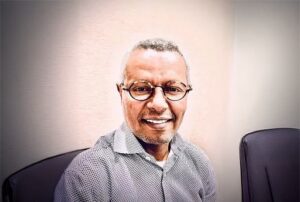
In an interview with Energy News Network (ENN) ahead of the Africa Energy Forum (aef) 2026, Goran Rajsic, Founder of Sun Africa, outlined the company’s long-term commitment to delivering energy infrastructure across the continent and its belief that Africa’s industrial future must be built by African businesses, talent and supply chains.
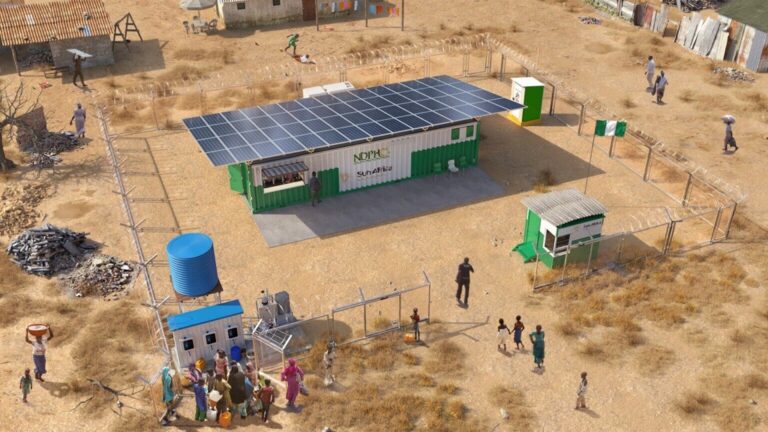
Sun Africa develops utility-scale solar and battery storage projects, alongside off-grid and mini-grid solutions across Africa. The company operates through a fully integrated model, developing projects, arranging financing, overseeing construction and enabling technology transfer to ensure capability remains in-country.
For Rajsic, Sun Africa’s identity is central to its approach. He emphasises that the company is an African business, with African engineers, project teams, partners and associates, supported by world-class technical partners and OECD-grade supply chains. That focus, he says, is reflected in the company’s commitment to building local capability and ensuring long-term value remains on the continent.
As a lead sponsor of aef for the fourth consecutive year, Sun Africa returns to Cape Town at a time when governments, investors and industry leaders are increasingly focused on the infrastructure required to support industrial growth. Rajsic argues that reliable power will be the foundation of that future – enabling countries to process resources locally, strengthen domestic industries and capture more value from their natural assets.
- What is driving Sun Africa’s strategy on the continent, and how do you see Africa’s energy landscape evolving over the next decade?
What drives us is simple: Africa has the resource, the demand and the ambition – what it has lacked is delivery. Roughly six hundred million people on this continent still don’t have reliable electricity, and at the same time you have governments that are deadly serious about industrialising. That combination is the single largest energy opportunity anywhere in the world. So our strategy isn’t about planting flags; it’s about closing the gap between ambition and execution – and doing it as an African company, with African people, investing in African capability.
The way we do that is with a fully integrated model. We develop, we arrange the financing, we build, and we enable the technology, operations and maintenance transfer – and we do it leaning on an OECD-forward supply chain: world-class manufacturing, strong technical depth, and best-in-class EPC partners. That integration is why our projects actually reach financial close and construction rather than living forever in a feasibility study.
Over the next decade I think you’ll see three shifts. First, solar paired with battery storage stops being ‘alternative’ and becomes the default way to add reliable, affordable capacity. Second, energy starts being planned around industry – around mines, factories, ports and data centres – not just delivered to a household. And third, power becomes the true enabler of value creation on the continent, the thing that lets Africa process its own resources and keep the value at home. That’s exactly the future this Forum is built around.
- What does this tell us about the link between energy, mining and industrial development in Africa?
Africa sits on significant deposits of lithium, cobalt, nickel and copper – the raw materials that go into batteries and advanced technology that the entire world is now competing for. But you cannot extract, process or add value to any of it without secure, affordable, round-the-clock power. For decades the pattern in Africa has been: export the raw ore, and import back the expensive finished product. Reliable energy is what breaks that cycle. It allows a country to process its own resources, capture the value at home, and create industrial jobs locally.
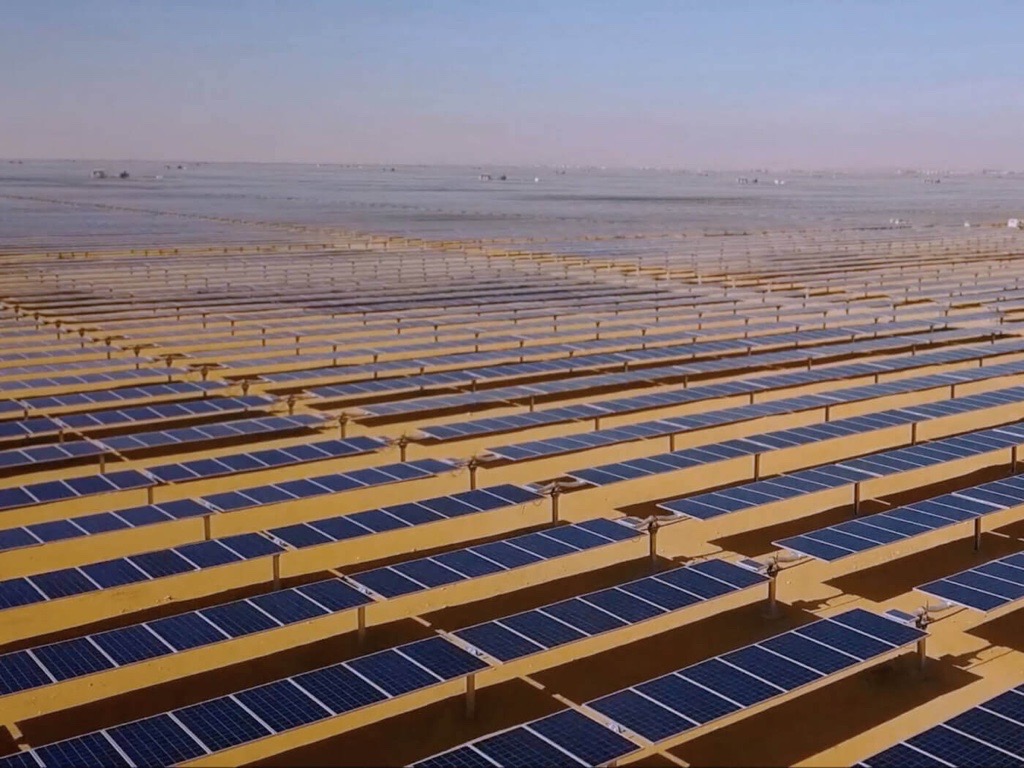
A mine and a processing plant need 24/7 availability – the battery provides stability, and a reliable power not only to the operations but to the communities around them. So solar-plus-storage is really a template: it shows that energy infrastructure, mining and industrial development are not three separate conversations. They’re one. Power is the precondition for all of it.
- What are the key factors that move large-scale energy projects from ambition to execution in African markets?
We’ve now delivered across very different markets in Africa, and the difference between projects that get built and projects that don’t comes down to a handful of factors. The first is genuine government partnership. We work hand-in-hand with authorities, because a large-scale energy project is only durable if it’s aligned with the country’s own priorities and properly de-risked on the policy side. It helps enormously that we are an African company – we understand these markets from the inside, because they are home.
The second is comprehensive delivery. We don’t just develop and then hand a project off to someone else to finance, and someone else again to build. We control the whole chain – development, financing, construction and operations handover. The gaps between those hand-offs are exactly where most projects in Africa stall and removing them is our single biggest advantage. Tied to that is financing: we structure bankable projects from day one, working with Export Credit Agency partners and leaning on an OECD-forward supply chain that gives lenders confidence.
Third, we phase the work so there are early, visible wins. In Angola, our first phase in Malanje and Luanda reached financial close and is under construction, including the largest individual solar plant in Sub-Saharan Africa with the capacity of 400MWs, while the next phase – 65 mini-grids and 200 micro-grids across the southern provinces – advances behind it. That project alone will electrify hundreds of thousands of households. When communities and governments see real delivery early, trust compounds and the next phase moves faster. And finally, you have to respect that every market is genuinely different – Nigeria is not Angola, Angola is not Liberia – so you adapt the model to local context rather than copy-pasting. Ambition is common in this sector. Execution is rare, and it’s earned.
- A key theme of aef 2026 is “Building Africa’s Industrialised Future.” As countries seek to create jobs, strengthen domestic industries and add value to their natural resources, where do you believe investment should be prioritised?
If we’re serious about building Africa’s industrialised future, the first priority is reliability – 24/7, baseload-grade capacity. For industry, availability is everything. A factory or a data centre can’t run on power that comes and goes. That’s why we pair solar with storage on every project: it turns an intermittent resource into something an industrialist can actually build a business on.
Second, I’d align energy investment directly with the critical-minerals corridors – the Lobito Corridor, the Liberty Corridor, Simandou. When you plan power, transport and processing together rather than in silos, you unlock value capture instead of just extraction.
But infrastructure alone isn’t the whole answer. The real dividend is people – African jobs, African skills, African ownership of these industries. That’s the heart of what Sun Africa stands for: we are an African company, our teams are African, and we invest in building the capability that will run this continent’s industries for generations. So my answer is: invest in the infrastructure and the people that let Africa keep more of its own value. Do that, and the industrialised future this Forum is talking about stops being a slogan and starts being built – by Africans, in Africa.
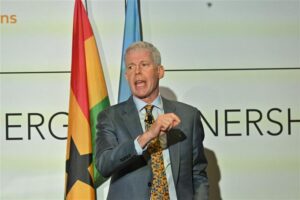
Sun Africa joins the Africa Energy Forum (aef) 2026 as Forum Sponsor. Additionally, Goran Rajsic, Founder & Chairman of Sun Africa will be delivering the Forum Sponsor Welcome Address on Tuesday 16 June.