From Sovereign Capital to Scaled Infrastructure: Ithmar Capital on Building Africa’s Investment Platforms
As Africa looks to close its infrastructure financing gap and attract more long-term capital into energy, transport and digital infrastructure, sovereign investors are taking on a more active role in shaping how projects are structured and financed.
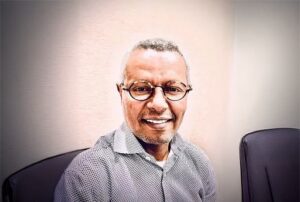
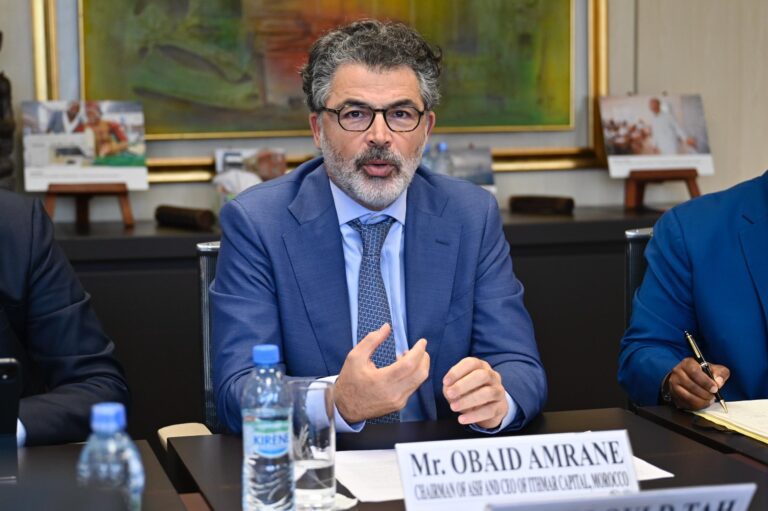
In this interview with ENN, Obaïd Amrane, CEO of Ithmar Capital discusses the launch of the ASIF Investment Platform, the role of sovereign capital in de-risking investment across African markets, and why regional co-investment platforms could become critical to scaling infrastructure development across the continent.
- The key theme of aef 2026 is “Building Africa’s Industrialised Future”. How is Ithmar Capital addressing the challenge of ensuring continuous energy access for industrial users, and what innovative solutions are you bringing to support growing industrial demand across the continent?
The reality is this: Africa stands at a pivotal moment in its development path. For decades, the continent has exported raw materials while most of the value creation has happened elsewhere. Today, renewable energy offers a unique opportunity to change that trajectory. With abundant solar, wind, and hydro resources, Africa can build competitive, low-carbon industrial transformative ecosystems. At the same time, and just as importantly, renewable energy can address a long-standing barrier to industrialisation: access to reliable and affordable power. But beyond generation capacity, the real issue is linking energy to industrial development at a regional scale.
It’s in this context that Ithmar Capital is working on addressing this challenge through a regional and investment-driven approach.
Africa holds a significant share of the strategic minerals and natural resources needed for the global economy. The opportunity is not only to transform these resources locally, but also to develop regional value chains, where extraction, processing, and manufacturing can take place across different African countries, each leveraging its comparative advantage. This approach can significantly increase the value captured within the continent, while boosting intra-African trade, industrial resilience, and job creation. To get there, we need coordinated policies, strong infrastructure, and deeper regional integration, alongside strategic partnerships and investment. The good news is that we are already seeing promising dynamics emerge across multiple fronts.
First, at a structural level, platforms such as the Africa Sovereign Investors Forum catalyse development by uniting African institutional investors to foster alignment, co-investment, and long-term vision across the continent.
In this spirit, Ithmar Capital, alongside its partners, is working on the development of a pan-African investment platform, with its first vehicle focused on renewable energy to drive industrialisation by providing the reliable, affordable, and low-carbon power essential for the continent’s development.
This dynamic is further strengthened by the strong commitment of ASIF members, whose collaboration reflects a shared ambition to scale African-led investment solutions, as well as by the support of the African Development Bank, which plays a key role in anchoring and accelerating such continental initiatives.
This continental momentum is not only reflected in institutional frameworks, but also in the emergence of concrete cross-border projects that translate this vision into action.
These projects show what is possible: a more integrated, industrialised Africa that captures greater value from its resources while powering its growth sustainably.
- Ithmar Capital has recently co-launched a pan-African investment platform with 5 other African sovereign investors aimed at mobilising international capital. What is the vision and objectives of this platform?
The Africa Sovereign Investors Forum (ASIF) Investment Platform was announced at the 4th ASIF Annual Meeting, in June 2025, in Abuja. It is a practical demonstration of African institutions working together to invest in large-scale infrastructure projects, and it will initially focus on renewable energy, with the ambition to expand into broader infrastructure sectors over time, including corridors, hubs, and social infrastructure.
This is the first of its kind sovereign-led co-investment platform in Africa.
It’s the result of several years of dedicated effort that required some novelty and ingenuity and believing in a greater purpose, and a vision we refer to as R.I.S.E. Africa, which stands for a Resilient, Inclusive, Sustainable and Empowered Africa.
It started with building a non-financial community, the ASIF Forum, which is centred around knowledge and experience sharing, capacity building, networking with peer institutions and promoting a structured framework for strategic dialogue. This initial step was essential to build mutual trust and, for the first time, enable African sovereign investors to act with that shared vision.
Once trust was built, co-investment was the logical next step. But it’s easier said than done!
Truth is that building such platforms is challenging. They require coordination between multiple parties, strong governance standards, credible pipeline across multiple markets, scalable projects, and robust risk management. However, it is what Africa needs today to attract the level of financing required to bridge the urgent infrastructure gap.
Co-investment platforms offer several advantages, which are lower costs, higher scalability, and for co-investors, the chance to invest in hand-picked deals with greater control over fees and investment decisions, rather than passively investing in a fund if that’s their preference.
What makes the ASIF Investment Platform model particularly strong is the role of African sovereign investors as long-term capital allocators, who can also bring local anchoring, expertise and alignment across multiple markets.
Our ambition is not only to invest in assets, but to progressively build sector operating companies that grow into African champions as scaled and integrated players capable of delivering sustained, long-term impact. Through the ASIF Investment Platform, we are also empowering a shift in the composition of financing from debt to equity. In a context of elevated debt vulnerabilities, scaling patient equity financing is urgent and must be directed toward projects with development impact and with real value creation.
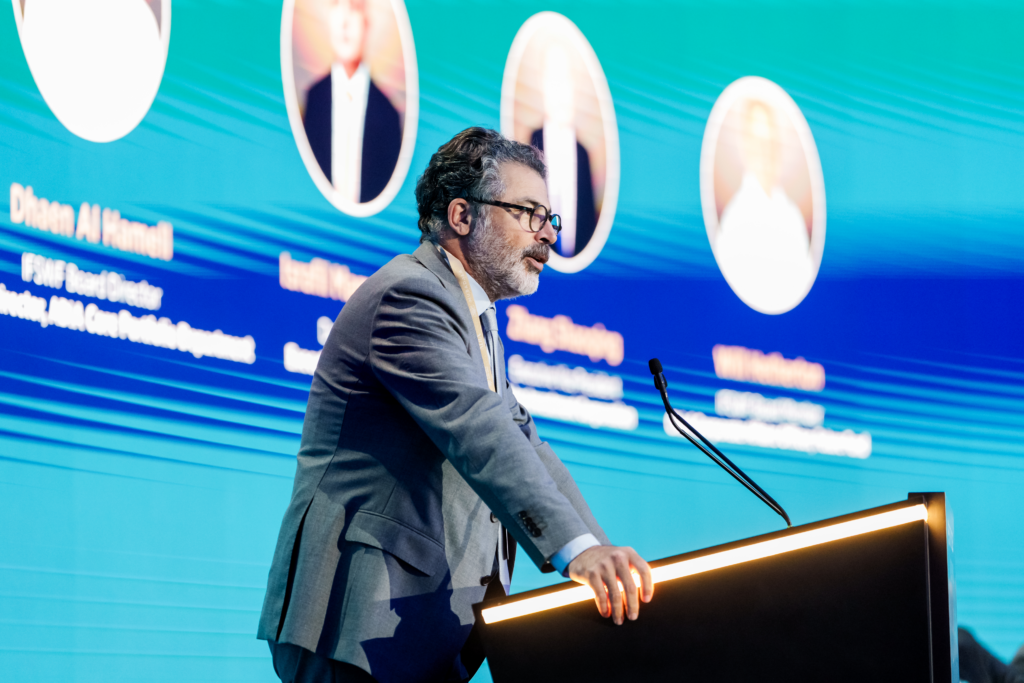
- How can sovereign capital act as a stabilising anchor in markets where political and currency volatility might otherwise deter private investors?
Sovereign capital can act as a stabilising anchor by absorbing risks that private investors are either unwilling or unable to take, particularly political and currency risks, while signalling long-term commitment to markets.
In fact, the key constraint remains currency risk. It is one of the main obstacles to mobilising international and private capital into Africa. Guarantees, blended finance, or first-loss mechanisms do not fully address FX risk, which can significantly increase the cost of capital.
In this context, sovereign investors play a critical role by structuring transactions in a way that mitigates this exposure and enhances predictability for private partners. While FX risk cannot be fully eliminated, within the ASIF investment platform we mitigate it through a combination of structural measures, including hedging instruments, portfolio diversification, and calibrated exposure limits across jurisdictions.
Political risk is of a different order. It cannot be engineered away through financial instruments alone. Sovereign investors do not eliminate political uncertainty, but they can help mitigate it indirectly, through alignment with governments, long-term presence in-country, and by anchoring projects within credible institutional frameworks. Their involvement sends a strong signal of confidence and continuity, which can be decisive for private investors.
That said, the real issue that strategic development funds, like Ithmar Capital, can most effectively address is not risk elimination, but risk structuring and project origination.
- As Morocco positions itself between both Africa and the Gulf, how does Ithmar Capital convert that geopolitical positioning into tangible investment architecture?
Morocco serves as a strategic bridge between Africa and the Gulf through institutional credibility, long-standing partnerships, diplomatic ties, and strong sovereign relationships.
Ithmar Capital translates this positioning into investment architecture by building long-term, trust-based partnerships with Gulf sovereign investors, embedded in structured, scalable co-investment platforms.
A key illustration of this dynamic is the Rabat Declaration. Major Gulf sovereign wealth funds, including ADIA, ADQ, and KIA, signed this declaration during ASIF’s inaugural ceremony in Rabat. Through it, they expressed their confidence in ASIF as a credible platform to facilitate and catalyse investment opportunities across Africa, particularly in infrastructure projects aligned with international standards and global capital market requirements.
The ASIF Investment Platform is the next step. In practice, instead of doing one-off deals, we offer opportunities to global partners as a coordinated group, not as fragmented individual funds. For large international investors, that makes a big difference. You have African sovereigns already aligned, with skin in the game, and a more standardised way to access multiple markets on the continent. That’s how we can unlock scale.
A single project might be too small or too risky for a large global player, but a platform backed by several African funds and their partners becomes a meaningful and investable proposition.
With the GCC funds, what works well is that we are very complementary. They bring deep pools of long-term capital and global sector expertise, while we bring local knowledge, project origination capacity, and the ability to navigate institutional and regulatory environments on the ground.