Lion Thorn Solar Park breaks ground with 49MW contracted to PPC and POWERX
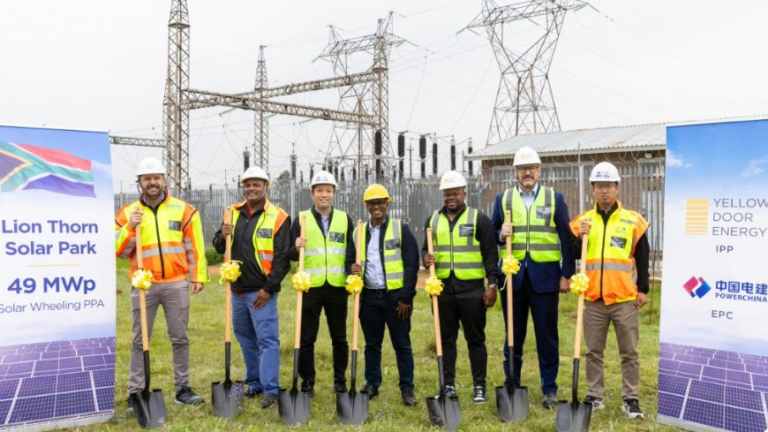
Yellow Door Energy has started building the 49MWp Lion Thorn Solar Park at Leeudoringstad in North West, with PowerChina as EPC contractor and Nedbank CIB as lender. It is the company’s second solar park in the town contracted to wheel power to the cement producer PPC and the licensed trader POWERX.
Construction has begun on the 49MWp Lion Thorn Solar Park outside Leeudoringstad in North West’s Maquassi Hills, where Yellow Door Energy broke ground last week with PowerChina as its engineering, procurement and construction contractor, and the plant is expected to generate about 115GWh in its first year once it is commissioned in 2028. Representatives of the Maquassi Hills local municipality joined the project partners at the groundbreaking, and Yellow Door Energy says the build will favour local jobs and suppliers.
PPC, the cement and construction materials producer, and POWERX, a private electricity trader licensed by Nersa, hold long-term power purchase agreements for that output, which will reach them by wheeling over the national grid and is expected to avoid about 104,190 tonnes of carbon emissions a year.
Nedbank CIB is financing the project, with financial close announced at the start of September, and Yellow Door Energy was advised on the financing by Synergy Consulting and on the legal side by Covington and ENS.
Leeudoringstad already carries a Yellow Door contract with PPC, signed in March 2025 for the 24.5MWp Naledi Ya YDE Solar Park in the same town, under which power is to be wheeled through the Eskom grid for 20 years to PPC’s Slurry and Dwaalboom cement plants in North West and Limpopo and its De Hoek and Riebeek plants in the Western Cape. PPC said at the time that the agreement would help it meet the requirements of the EU’s Carbon Border Adjustment Mechanism.
POWERX had signed its own agreement for Naledi Ya YDE two weeks earlier, on 10 March 2025, to wheel the power to small and medium-sized businesses across the country that are too small to contract directly with a utility-scale generator, with chief executive Thembani Bukula saying that “renewable energy will be wheeled to our customers across the country”.
Images: Creamer Media