Okavango Eternal runs five more years, with Angola, Namibia and Botswana aligned
The National Geographic Society and De Beers Group have renewed their Okavango Eternal partnership for another five years, announced in New York on 24 September. Botswana’s president and ministers from Angola and Namibia used the occasion to form an alliance across a basin whose water supplies more than a million people.
Okavango Eternal began in 2021 with two stated targets, formal protection for 5.4 million hectares around the headwaters of the Okavango River Basin by 2026, and as many as 10,000 conservation-linked livelihood opportunities over the same period.
By the time the partnership reached its five-year mark it counted 19 research expeditions, 230 carbon-storing peatland sites mapped, 82 community members trained through the Watchers programme and 2,118 livelihood opportunities across the three countries.
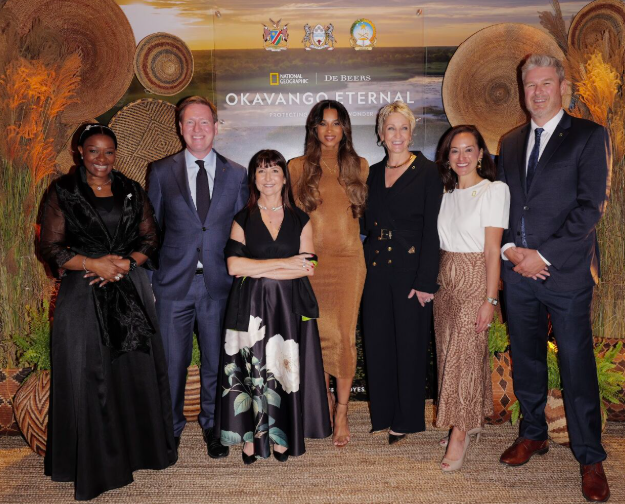
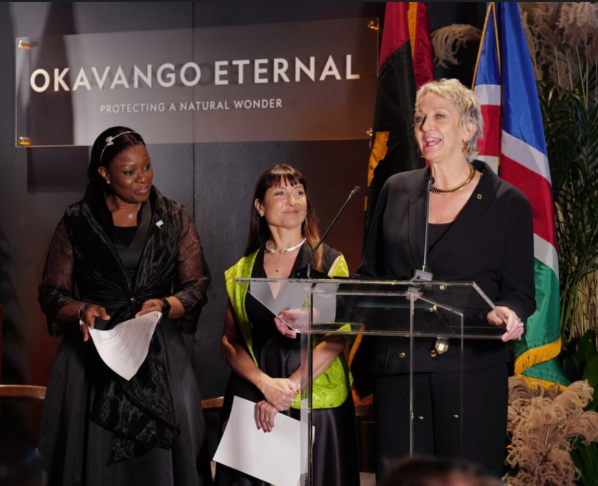
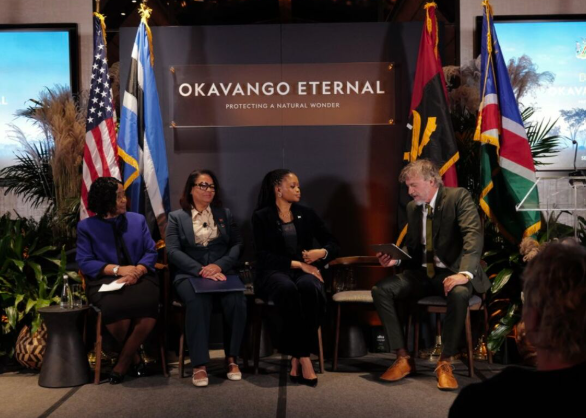
The National Geographic Society and De Beers Group announced the renewal on 24 September, the morning after an event the two co-hosted in New York during Climate Week, where Botswana’s President Duma Gideon Boko and ministers from Angola and Namibia came together to form an alliance on cooperation across the basin.
More than 95% of the water sustaining the Delta rises in the Angolan Highlands before running through Namibia into Botswana, and while the Delta itself carries formal protection, its Angolan source does not.
Risks upstream include water diversion and commercial agriculture, in a basin that supports food, water and livelihoods for more than a million people and sustains one of the world’s largest elephant populations, with the Angolan headwaters feeding other major river systems across the continent.
Jill Tiefenthaler, the Society’s chief executive, wrote that “connection and collaboration is where conservation begins”, and the next phase returns to the 5.4 million hectares at the source in Angola, alongside community-led stewardship across all three countries.
Images: Jill Tiefenthaler