EXCLUSIVE: Why investors are looking at Nigeria differently, according to Nextier’s Patrick Okigbo
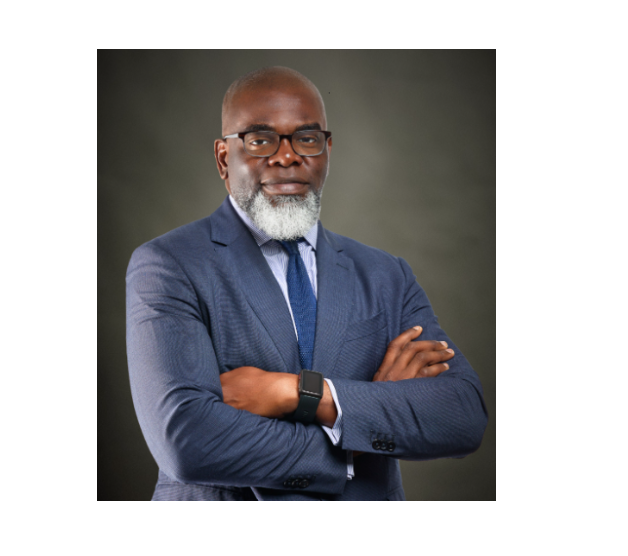
Patrick Okigbo III, Founder and Principal Partner of the Abuja advisory firm Nextier, once advised the Presidency on reforming Nigeria’s electricity industry. Speaking to ENN, he argues that investors often misread Nigeria as a single market, and that the clearest sign the reforms since 2023 have worked will be investors coming back a second time.
Nigeria removed its petrol subsidy in May 2023 and began liberalising its foreign exchange market the following month, and those are the first two reforms Patrick Okigbo names when he describes how Nigeria’s investment climate has changed for an international investor. He adds the clearing of much of the foreign exchange backlog and improved price discovery in the currency market, and in his account the macroeconomic environment has moved much further than the operating one.
He cites the IMF’s view that the reforms have produced strong macroeconomic outcomes and resilience, and the World Bank’s that stabilisation is taking hold, while listing what investors still meet on the ground, from an unreliable power supply and difficult logistics to insecurity, regulatory inconsistency and weak state capacity. Electricity and transport are among the binding constraints he notes the World Bank has identified. “We can agree that the reform story has improved quite considerably,” he says. “The execution story is still what remains unfinished.”
Capital returned quickly once conditions improved, Okigbo says, although much of it came first as portfolio money, and the National Bureau of Statistics recorded $2.08 billion of portfolio investment in the first quarter of 2024 against $119 million of foreign direct investment. Those sums made up 61.5% and 3.5% of all the capital imported that quarter.
“We have opportunities,” he argues, and the shortage he identifies is sufficient confidence that an investor can price the rules governing an opportunity five to ten years from now. Breaking the pattern requires credible commitments in place of reform announcements, meaning in his view predictable access to foreign exchange and institutions able to survive a change of leadership. “Investors can pick risk. They can price it,” he says. “What they struggle to price is the arbitrariness that continues in the system.”
The same quarter’s statistics put 82% of imported capital in Lagos and none at all in 34 states. Foreign investors, in his experience, often treat Nigeria as one market governed by one policy regime. “Nigeria is closer to 37 political economies operating beneath a federal macro framework,” Okigbo told ENN, and in his account states such as Lagos, Enugu, Ogun, Kaduna, Zamfara and Edo can present radically different combinations of leadership, bureaucratic capability, infrastructure, security and regulatory behaviour. “That distinction is becoming even more important as powers such as electricity regulation migrate downwards,” he adds.
Enugu and Ekiti became the first states to take over regulation of their electricity markets from the Nigerian Electricity Regulatory Commission in October 2024, and by July 2026 the commission had transferred oversight to 16 states. Okigbo describes electricity decentralisation as relatively promising because it has moved beyond a presidential announcement into legislation and the actual transfer of jurisdiction, with state regulators now exercising real authority, although Nigeria’s record tells him legislation alone is insufficient.
Okigbo tests durability against what he calls the five Ps, asking whether a reform changes who holds power and who receives the payoff, whether its rules are policed, whether stakeholder perceptions shift and whether it embeds deeply enough to overcome path dependence. “A reform becomes durable only when reversing it is more politically and economically costly than maintaining it,” he says. “That’s the situation we’re in.”
He would send capital first to sectors where large unmet demand meets improving rules, provided the investment can be insulated from state failure, and on that test he points to distributed power, digital infrastructure, logistics, agro-processing and selected minerals value chains. Power weighs heaviest with him because unreliable electricity remains one of Nigeria’s largest productivity taxes, with losses he puts at about 5% of GDP, citing the World Bank. “It makes compelling business sense to fix power because we are already paying for grossly inefficient alternatives,” he says.
Location comes after sector in his method, and he would choose states selectively by asking which combination of sector and state has the strongest reform coalition behind the opportunity an investor wants. “The correct unit of analysis for Nigeria today is increasingly not at the country level,” he argues. “It is sector first, then states, then an examination of the political coalition holding it all together.”
By the end of 2027 he wants foreign direct investment to have risen materially beyond portfolio flows, and foreign exchange access to have become a settled question that no longer troubles boardrooms. He also wants private power investment accelerating visibly in the states now running their own electricity markets, with at least some of them able to show that decentralisation has produced measurably better investment outcomes.
The strongest signal, if he were the investor looking at Nigeria, would be hearing another investor say they are putting money in again because their first investment behaved roughly as the rules said it would. “That is when Nigeria moves from being a compelling opportunity to becoming an investable one,” he says.
Nigeria NOW! Global Investors Expo 2026 takes place on 19 and 20 November at the Bola Ahmed Tinubu International Conference Centre in Abuja, under the patronage of the Honourable Minister of Solid Minerals Development. Nextier is a partner of the Expo.