Zambia electricity consumption rises 48% as mining absorbs the new supply
Installed capacity now stands at 4,576MW, of which 841MW is solar, and Kariba’s usable storage has roughly doubled in a year. Almost all of the additional units drawn last year went to the mines, and Open Access is now the mechanism deciding who is served first.
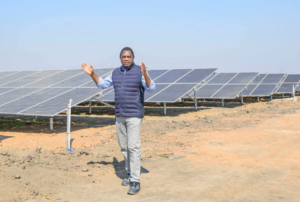
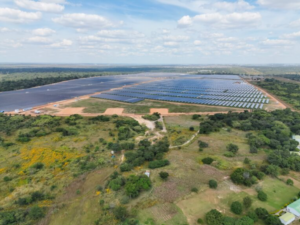
At Chisamba in Central Province, a 100MW solar plant built by a ZESCO subsidiary sells its output under a thirteen-year power purchase agreement with GreenCo Power Services, and most of that power reaches First Quantum Minerals. The arrangement allows ZESCO to redirect an equivalent volume back to households, and it is the clearest working example of how Zambia is closing its gap.
Chisamba was commissioned in June 2025 at a cost of around 100 million dollars, employing more than 1,200 people during construction with about 98 per cent of the workforce hired locally. Government figures now put installed generation capacity at 4,576MW, including 841MW of solar, in a system that drew roughly 85 per cent of its electricity from hydropower before the drought.
Water has returned alongside the panels. The Zambezi River Authority revised its 2026 allocation for power generation to 36 billion cubic metres from the 30 billion set last November, splitting it evenly between ZESCO and the Zimbabwe Power Company, after normal to above-normal rainfall across the Zambezi catchment. Usable storage at Kariba stood at 48.09 per cent on 22 June against 23.47 per cent on the same date a year earlier, and 13 per cent at the bottom of the drought in 2024.
Energy Regulation Board data cited in a recent analysis in News Diggers has national electricity consumption rising from about 10,436 GWh in 2024 to 15,471 GWh in 2025, an increase of 48.2 per cent. Mining consumption over the same period rose from roughly 4,650 GWh to 9,785 GWh, accounting for the overwhelming share of the additional units.
The analysis is careful about what that does and does not mean. A large industrial buyer signing a long contract is what makes a new plant bankable, brings imported power into the system and takes weight off ZESCO’s balance sheet. Chisamba exists because there was a creditworthy offtaker at the end of it.
Two kinds of contract sit underneath the same headline figure. A contract that finances a new plant leaves the whole system better supplied. A contract that secures priority over capacity already built improves reliability for one customer inside a constrained network without adding a megawatt to it. Open Access, net metering and regional trading have all expanded since the drought, and the composition of Zambia’s recovery depends on which of the two has been doing most of the work.
Zambia’s National Energy Compact commits the country to lifting non-hydro renewables from 3 per cent of the mix to 33 per cent by 2030. Chisamba is 100MW of that.