Off-grid solar financing crosses into public capital markets
A $50 million green bond issued by African Frontier Capital and listed in London has taken d.light’s receivables platform past $1 billion of cumulative purchasing capacity. The structure turns repayments from household systems into a security institutional investors can buy, and it is the first of its kind in the sector.
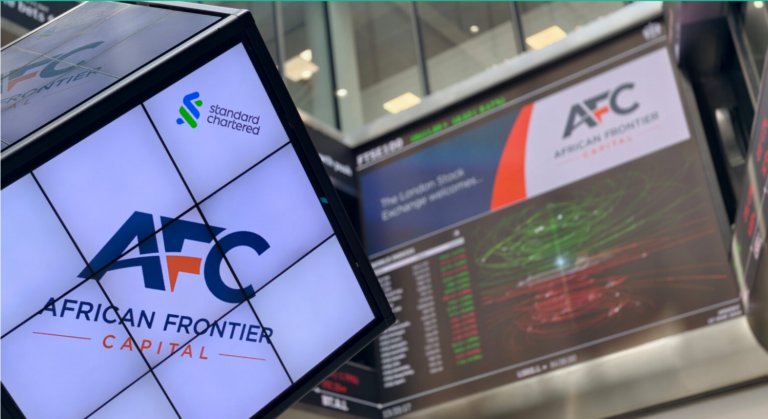
African Frontier Capital has issued a $50 million green bond on the London Stock Exchange’s International Securities Market, taking d.light’s receivables platform past $1 billion in cumulative purchasing capacity. It is the first public bond in Africa’s off-grid solar sector built on pay-as-you-go receivables, which moves a financing model that has run on development capital and private credit into the reach of institutional investors.
The mechanism is simple enough once the terminology is set aside. A household buying a solar home system on pay-as-you-go terms makes small regular payments over months or years, and those payments are an asset. Bundling enough of them together produces a predictable income stream, which can be sold to investors who want yield rather than exposure to running a solar business across rural sub-Saharan Africa. The proceeds return to the company, which uses them to sell more systems.
Getting there required a credit enhancement. The bond carries a guarantee from the Green Guarantee Company, which announced its first two climate finance transactions in London in June, mobilising $70 million between them. A guarantee of that kind is what allows a security backed by African household receivables to reach a rating and a listing that institutional mandates can accept.
The financing is expected to extend electricity access to around 4.3 million people across sub-Saharan Africa. d.light projects that its securitisation platform will support more than 20 million first-time connections across its markets by 2030 and create over 50,000 jobs, counting towards Mission 300, the World Bank and African Development Bank programme to connect 300 million people by the end of the decade.
The Green Guarantee Company’s second transaction runs through a different channel. A $20 million framework guarantee to Bank of Africa UK is set against mini-grid development in Nigeria under DARES, the distributed renewables programme run by the Rural Electrification Agency with World Bank backing. Where the d.light bond addresses household systems, this one addresses the mini-grids that sit a tier above them.
What both share is a method rather than a technology. Neither transaction builds anything directly. Each takes capital that has already been deployed, or risk that a commercial lender would not otherwise hold, and recycles it into the next round of connections. For a sector whose constraint has been the cost and tenor of money rather than the price of panels, that is the part worth watching.
Photo: GGGI