
ZimZam 2026: what Zambia and Zimbabwe have built together
ZimZam 2026 celebrated what Zambia and Zimbabwe have built together under the theme of “Connectivity, Credibility and Cooperation”, and in Livingstone the two national utilities set out what makes them credible buyers of private power as Western Power Company signed the financing mandate for Ngonye Falls on the banks of the Zambezi.
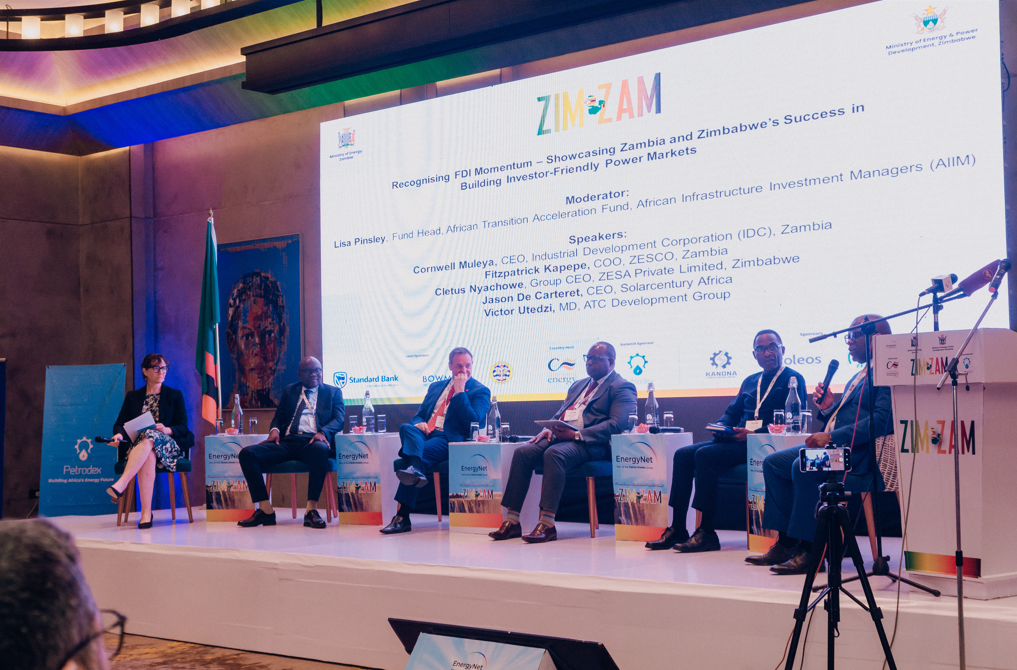
ZimZam 2026, the third Zimbabwe-Zambia Energy Projects Summit, met from 3 to 5 November at the Mukuni Conference Centre of the Radisson Blu Mosi-Oa-Tunya in Livingstone, its second year running on the Zambian side of Victoria Falls after a first edition across the river in Victoria Falls town in 2024, under the theme “Celebrating How Zambia and Zimbabwe Have Unlocked FDI Through Connectivity, Credibility and Cooperation”. The summit set out to bring together “senior representatives from ministries, utilities, regulators, investors, and developers”, and it drew more than 300 delegates and over 70 speakers.
The power system that ZimZam’s theme celebrates is one Zambia and Zimbabwe already share at Kariba, where ZESCO and the Zimbabwe Power Company generate from opposite sides of the same dam wall and the Zambezi River Authority, which the two governments own together and which was among the summit’s lead sponsors, divides the water for generation equally between them. At the authority’s Council of Ministers in Victoria Falls last December, each government committed $220m in equity towards the 2,400MW Batoka Gorge Hydro-Electric Scheme, a $4.2bn project the two countries will own jointly under a public-private partnership, according to Zimbabwe’s Business Times and Green Building Africa. After strong inflows in the 2025/26 rainy season, Lake Kariba held 33% of its usable storage on 2 November, the eve of the summit, against 9% a year earlier, by the authority’s readings.

Zambia’s installed generation has reached 4,722MW, up from 3,777MW in 2024 and with 1,027MW of it solar, by the figures Vice President Mutale Nalumango gave in Lusaka, and ZESA Holdings reports 635MW of private generation under construction in Zimbabwe and another 730MW moving towards financial close.
Before the summit, Aleem Tharani, a partner at Bowmans, another lead sponsor, said that “Southern Africa is proving that interconnection through SAPP and a credible, investor-friendly regulatory environment translate directly into deal flow”, and connectivity had its advocate at the opening in the summit sponsor, Petrodex, whose Deputy Chief Executive for West Africa, Monie Captan, made the case for cross-border trading and said the company is working through licensing to trade in Zimbabwe. By his account the Mailo solar plant in Zambia is the first project in the solar programme Petrodex agreed with ZESCO in 2024, and Mailo’s first phase began trading power through the Southern African Power Pool in 2025, which Green Building Africa reported was a first for BB Energy and for the pool’s platform.
Kanona Power, a Zambian energy trader and one of the summit’s sponsors, set out plans in February for a $100m private line from Mwakibete in Tanzania to Nakonde in Zambia, which Green Building Africa reported was expected to be finished in about a year, ahead of the World Bank-financed Zambia-Tanzania interconnector due around 2028. Between the two summit countries, the first phase of the ZIZABONA interconnector is expected to give Zambia and Zimbabwe another route for wheeling power, Makozo Chikote told the river authority’s council in December as Zambia’s Minister of Energy, according to Green Building Africa, and at the opening Zimbabwe’s Deputy Minister of Energy and Power Development, Yeukai Simbanegavi, promised a harmonised transmission pricing method for the power pool by the end of 2026.
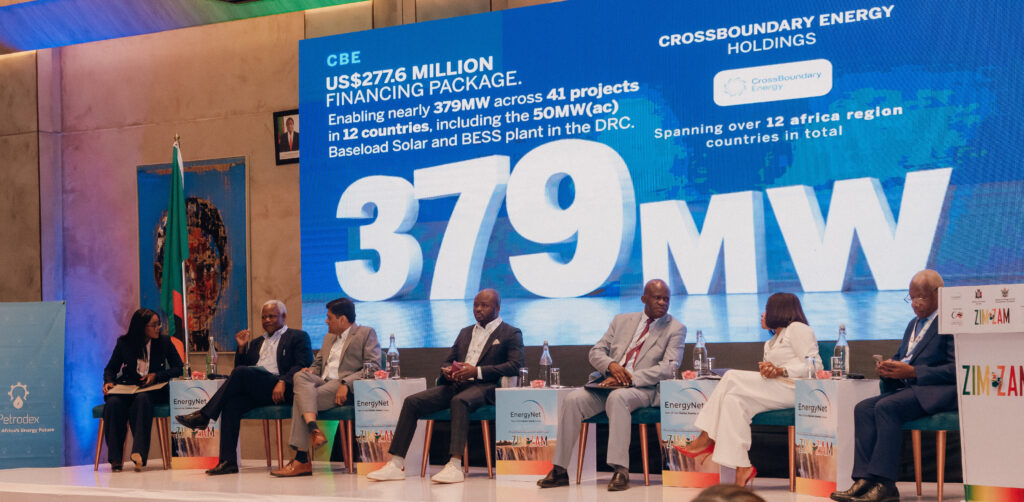
Market reform gave the theme its credibility on the Zimbabwean side, where Simbanegavi told the opening that independent operators can now bid for 25-year renewable distribution and retail licences under Statutory Instrument 128 of 2026, and both her remarks and Captan’s are in ENN’s report from the opening. On the Zambian side the country host, Copperbelt Energy Corporation, financed 136MW of solar at Itimpi on its own bond without a state guarantee, as ENN has reported.
The two national utilities answered for their own record on the first panel, with ZESA’s Group Chief Executive Cletus Nyachowe alongside ZESCO’s Chief Operating Officer Fitzpatrick Kapepe, whose utility was also an associate sponsor of the summit. “For a public sector project to take off, you need a strong utility,” Nyachowe said, according to the Zambian Observer, which reported that he tied investor confidence to better regulation and reliable payment. Kapepe, who described independent power producers as both collaborators and rivals, went back to ZESCO’s own books. “By December 2021, Zesco’s obligations to Independent Power Producers was at US$1.8 billion,” he said, as reported by News Diggers. “For people that understand the power sector, if you don’t pay the IPPs, you actually start accumulating debt.” News Diggers put what ZESCO owes IPPs today at $109.7m, against that $1.8bn in 2021, with $93m of it owed to the Turkish company Karpowership.
Solarcentury Africa’s Chief Executive Jason De Carteret, also on the panel, said that “what makes the deals work is the existence of the customer”, and in the week before the summit his company, part of BB Energy Group, had announced the 112MWp Kusoka solar plant in North-Western Province. PV Tech reported that the plant will sell primarily to First Quantum Minerals’ Sentinel copper and Enterprise nickel mines and to other buyers on a merchant basis, including through the Southern African Power Pool.
On 2 November, the day before the opening, Solarcentury Africa signed a facility of up to $370m with Standard Bank, a lead sponsor of the summit, and according to Ecofin Agency the facility funds a 59MWp expansion taking Mailo to 120MWp and refinances the company’s first merchant plants, with $86.2m committed in a first tranche that the Dutch development bank FMO joined. “Financing merchant renewable energy projects requires tailored structures to address market risk,” said Sherrill Byrne, Head of Project Finance at Standard Bank.
Cooperation across the border ran through the banks as well, with Standard Bank South Africa and Stanbic Bank Zimbabwe, two arms of the same lead sponsor, appointed in Livingstone as mandated lead arrangers for Vungu Solar’s 30MWac plant in Gweru, while JA and MBHE Valley Acres signed a partnership there on commercial solar and storage in Zimbabwe and Zambia, both reported by ENN. Soleos Energy, an Indian solar developer among the summit’s sponsors, works in Zambia with a local partner, Octane Investment, and the two expressed interest in January in developing 1GW of solar in the country by 2030, according to a Ministry of Energy statement reported by Enerdata.
Government and lenders are working together on the rural market as well, and Alex Mbumba, Chief Executive of Zambia’s Rural Electrification Authority, told the session on turning access into productive use that about $240m has been mobilised from government and the World Bank towards the Rural Electrification Master Plan launched in April. “If you read the Electrification Master Plan, you will see that it provides an envelope of US$1.52 billion required,” he said, according to News Diggers.
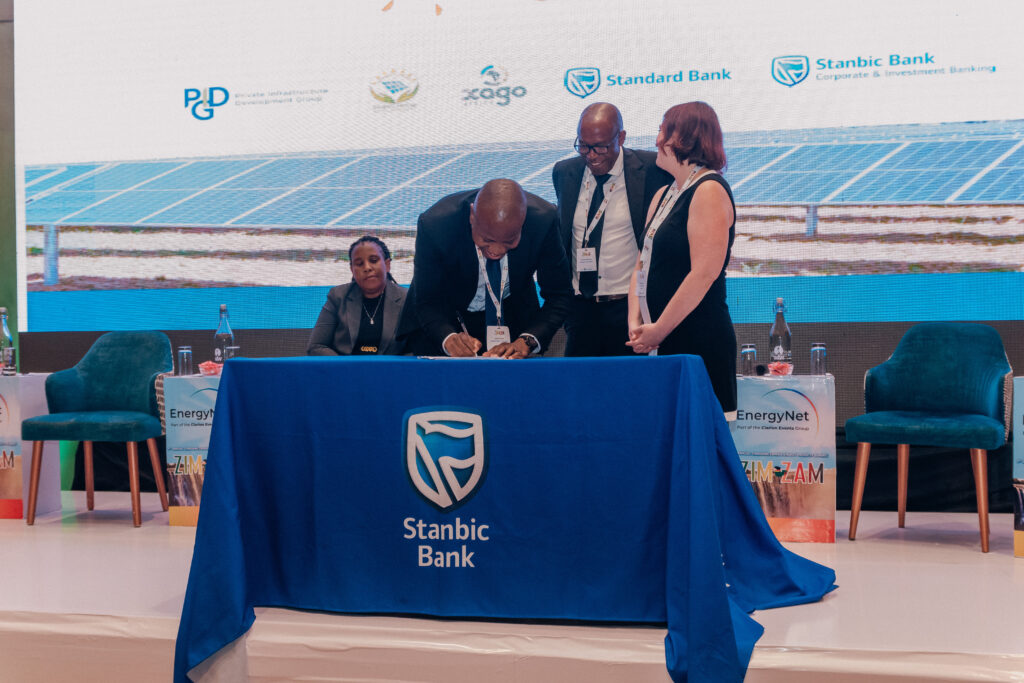
Upstream on the Zambezi, in Western Province, Western Power Company used the summit to appoint Standard Bank South Africa and Stanbic Bank Zambia, alongside the Development Bank of Southern Africa, as co-mandated lead arrangers for the 180MW Ngonye Falls run-of-river project, which holds what Water Power Magazine describes as Africa’s first Gold certification under the Hydropower Sustainability Standard. PIDG says the plant will send 830GWh a year down a new 110km, 220kV line to Sesheke on the Namibian border. The company calls the mandate the final step before financial close and the start of construction, and its thanks went to partners including the Barotse Royal Establishment, the traditional authority in Western Province. “Signing the Mandate on the banks of the mighty Zambezi River makes this occasion even more special,” said Sipho Phiri, its Executive Chairman and co-founder.