One market, not fifty-four
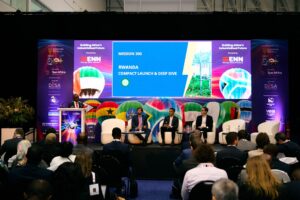
Africa has more countries than any other continent, and a power system fragmented along every border between them. At AEF 2026, the AfDB’s Wale Shonibare, Africa GreenCo’s Lion Mashiri and Ndola Energy’s Adrian Silwimba argued that continental-scale projects only become financeable when electricity can be traded as freely as it is generated.
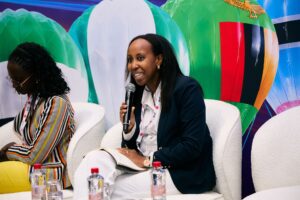
Africa’s electricity system is being planned 54 times over, one national grid and one national rulebook at a time, and at the Africa Energy Forum the African Development Bank’s Wale Shonibare said plainly what he makes of that. “It’s a bit crazy that each of the 54 countries is trying to do their own thing,” he told the forum’s regional integration sessions. The alternative he and others argued for is a single electricity market, in which power is traded and financed at the scale of the continent rather than the country.
The size of that prize is easiest to see in the projects that have never fitted inside one border. “If we can get a single electricity market, then we can start to think at continental scale for projects like Inga rather than nationally,” Shonibare said. Inga, the hydropower complex on the Congo River, has been discussed for decades because its potential is larger than any national demand it could serve alone, and it stands for a whole class of projects that only a continental buyer base can carry.
The obstacles are written in rulebooks. Lion Mashiri of Africa GreenCo, which buys and trades power across southern African borders, described what fragmentation does to a developer deciding where to build. “There is a need to harmonise the trading rules across the borders, so that IPPs can actually put up their projects in whatever geographical jurisdiction,” he said. The point lands hardest for renewables, where the best solar and wind resources rarely sit inside the markets most able to pay for them.
The machinery for the larger market already has a name. The African Union launched the African Single Electricity Market, AfSEM, in 2021 with the ambition of knitting the continent’s regional power pools into one trading system, and the Southern African Power Pool that ran through the forum’s discussions is the most developed of those building blocks. What the AEF panels added is the financier’s reason for urgency, since harmonised rules are what turn a cross-border project from a bilateral negotiation into a bankable proposition.
Money is now reaching the wires themselves, as ENN reported this week on the concession model bringing private capital to transmission, so the harder question is moving to what happens once the lines exist. Adrian Silwimba of Ndola Energy, the Zambian independent power producer, made the distinction the rest of the discussion kept circling, between the infrastructure that makes trade possible and the institutions that make it happen.
For the investors the forum exists to bring in, his was the line worth keeping. “Transmission enables the possibility of trade, but having an evolved, functional market creates the reality of trade,” Silwimba said.