Nigeria industrial solar reaches 200MW as a steel plant breaks ground in Niger State
Niger State has broken ground on the 200MW dedicated to one steel complex, SEN’EAU and TotalEnergies have inaugurated 21MW at two Senegalese water sites, and Daystar has finished 6.884MWp for Nestlé. The Global Solar Council puts distributed systems at 44% of new African capacity, and says the real figure is higher.
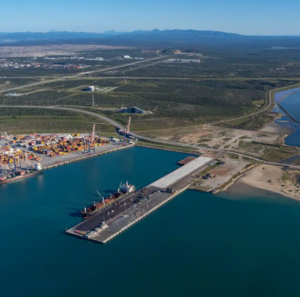
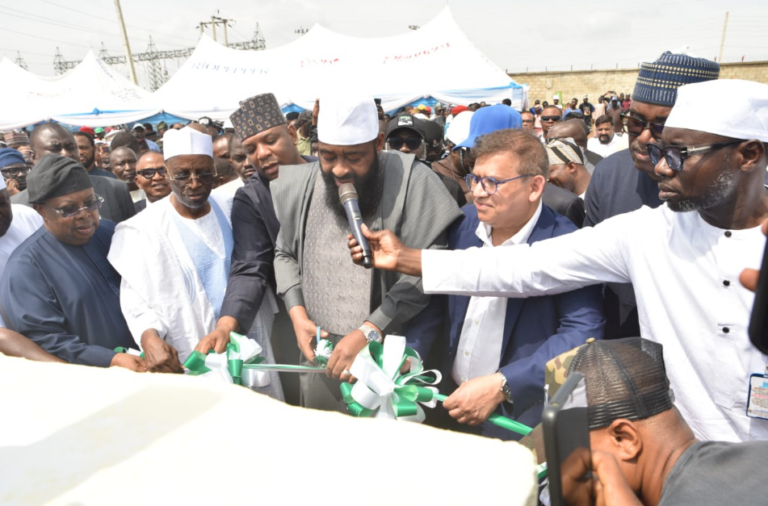
At Sabon Wuse in Niger State, north of Abuja, the state government handed 500 hectares to Abuja Steel Mills in late June for an integrated steel plant and industrial park. The complex is to be powered by a dedicated 200MW solar farm, built to run independently of the national grid. Ground was broken at the same ceremony. Abuja Steel Mills is a subsidiary of African Industries Group, which has operated in Nigeria since the early 1970’s and is chaired by Raj Gupta. Governor Mohammed Umaru Bago used the handover to announce a further 200,000 hectares to be gazetted for industrial investment. The company describes the project as the largest solar-powered steel operation in sub-Saharan Africa, though neither the cost nor the construction timeline was disclosed.
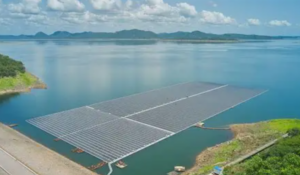
At Keur Momar Sarr, on the shore of Lac de Guiers in Senegal’s Louga region, 18,300 panels now feed the largest drinking water production site in the country. A second array of 15,300 panels stands at Méouane in Thiès, powering the Mékhé booster station. SEN’EAU and TotalEnergies inaugurated both on 2 July, a combined 21MW covering up to 32 per cent of what the two sites consume and avoiding an estimated 27,700 tonnes of carbon dioxide a year. The infrastructure they serve carries water to more than 8.4 million people.
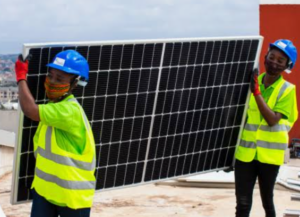
Ten days earlier, Daystar Power confirmed 6.884MWp in operation across four Nestlé plants. Two sites in Abidjan carry a combined 3,447kWp, with 2,547kWp at Tema in Ghana and 890kWp in Dakar. The company has this year also announced 5.2MWp for Société de Ciment de Côte d’Ivoire and 1.9MWp for Olam Agri in Ghana. When Shell acquired Daystar in 2022 it had 32MW installed across 300 sites. It now reports more than 150MW across upwards of 400.
What links a steel furnace to a water utility is the quality of the offtaker. A concession holder supplying 8.4 million people, or a manufacturer working to a corporate decarbonisation target, presents a lender with a credit that needs no sovereign guarantee behind it. The power is consumed where it is generated, which takes both the grid connection queue and the wheeling tariff out of the calculation.
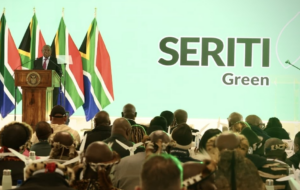
The Global Solar Council’s Africa Market Outlook for Solar PV 2026 to 2029, published in February, records a 54 per cent rise in solar installed across Africa in 2025 over the previous year, with distributed systems accounting for 44 per cent of it. The report is explicit that the share is undercounted in official statistics, and AFSIA attributes roughly 85 per cent of the capacity its own tracking misses to the commercial and industrial segment. Speaking at Sabon Wuse, Nigeria’s power minister Joseph Tegbe said the government was working to resolve the contradictions that had made electricity “a source of national frustration rather than national productivity”.
Photo: This Day