Mission 300 partner pledges pass $50bn while committed project finance reaches $15bn
The World Bank Group and the African Development Bank had committed close to $15 billion directly to Mission 300 projects as of 16 June, with a further $4.5 billion mobilised in co-financing from partner organisations. Partner pledges across the wider initiative now exceed $50 billion.
The distance between those two figures is the substance. Officials involved have been explicit that financial pledges must pass through formal approval, project preparation and disbursement before they become anything on the ground, and the $50 billion figure describes intent rather than money in motion.
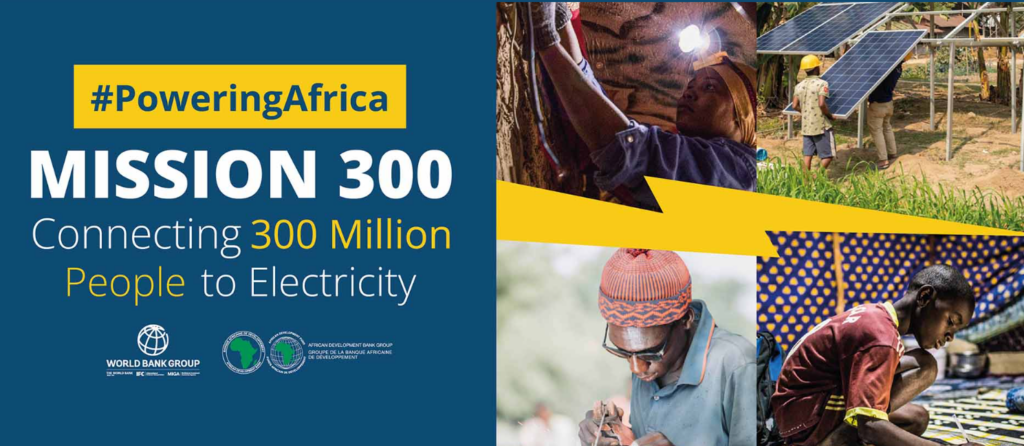
What has moved is measurable. On 16 June the two banks announced that Mission 300 had connected more than 50 million people across 40 countries, at close to double the pace recorded when the initiative began in April 2024, one sixth of the way to the 300 million target set for 2030. National Energy Compacts have been signed in 30 countries.
The individual programmes give the total its shape. The World Bank-supported Ethiopia Electrification Programme has delivered over 1.6 million on-grid connections, reaching more than eight million people and over 19,000 schools, clinics and government buildings. The Accelerating Sustainable and Clean Energy Access Transformation programme is designed to reach 100 million people across 20 countries in eastern and southern Africa over five years. Nigeria’s DARES programme is providing solar solutions to over 17.5 million people.
Philanthropic capital has scaled alongside the banks. The Rockefeller Foundation and the Global Energy Alliance for People and Planet have together committed more than $100 million to the initiative, up from $10 million announced in September 2024, spread across 23 countries from Nigeria to Madagascar, with Rockefeller carrying roughly 47 per cent of the total.
Regional trade is doing work the headline connection figures do not capture. Under the Gambia River Basin Development Organisation interconnection, hydropower from Guinea’s Kaleta and Souapiti plants now exports 1,174 GWh a year to Senegal, The Gambia and Guinea-Bissau. Investment in grid modernisation, prepaid meters and the regularisation of informal connections is projected to reduce commercial losses on Guinea’s network from 40 per cent in 2025 to 20 per cent by 2030.
Forty-eight countries endorsed the Dar es Salaam Energy Declaration in January 2025, which aligned the initiative with the African Union’s Agenda 2063. Three months into the second half of 2026, the arithmetic that matters is 250 million people in four years.
All images: Mission 300