EXCLUSIVE: Three prototypes and a final product, Mpepu Energy on building turbines in Malawi
Madalitso Chimpeni has spent three years building wind turbines in Malawi. Speaking to ENN, the Mpepu Energy founder describes redesigning around a five-month wait for generators, fabricating in workshops that normally handle electric gates, and what a grant from the Youth Energy Summit bought that the hardware did not.
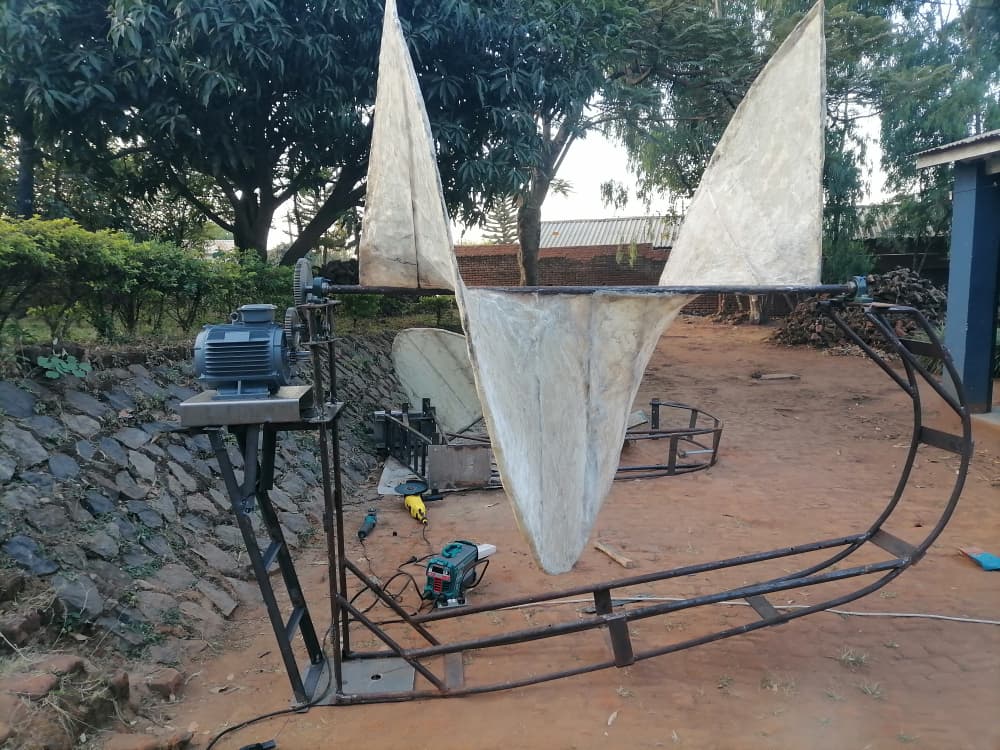
Madalitso Chimpeni has a working turbine. After two years of prototyping and a year of building, the helix turbines are fabricated and waiting to go in the ground, and the 120 households they were designed for are still the target.
“I’ve been working on something and now I have something to show for it, that can actually generate power and create some impact in a community,” he said, asked what he was proudest of. “To have a final product that actually works the way I want it to.”
Getting there taught him about supply chains before it taught him about wind. The permanent magnet generators were made in China in two weeks and took five months to reach Malawi. Rather than wait out the delay, Chimpeni redesigned. Three turbines instead of seven, paired with solar, so the system generates from both.
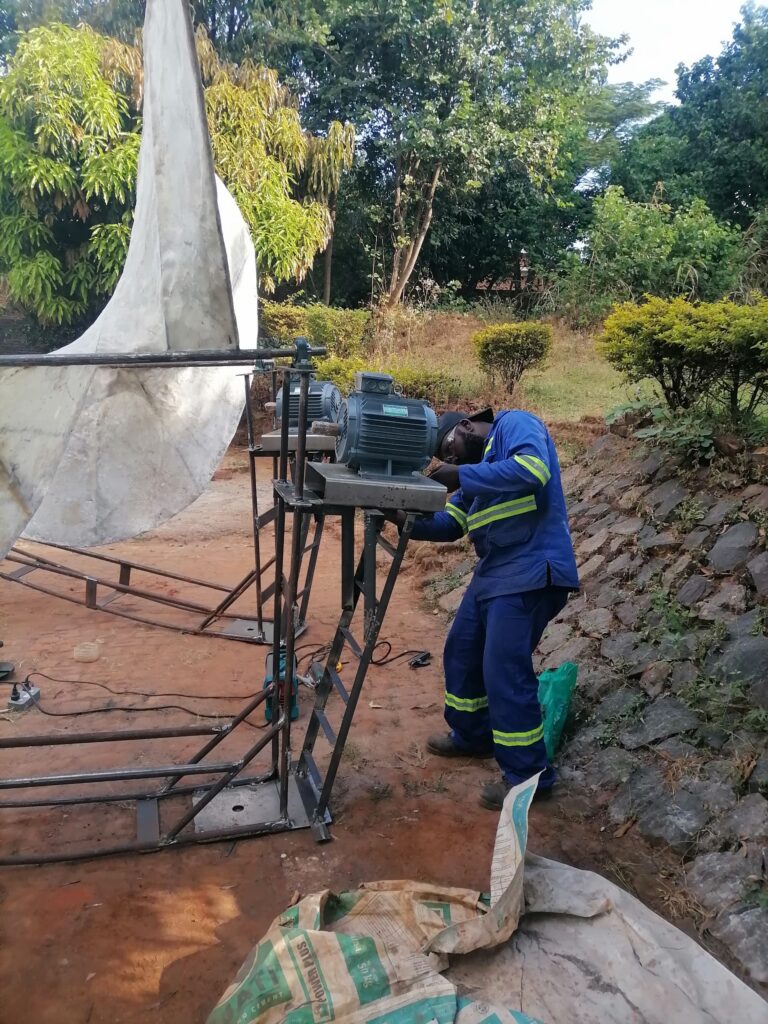
Fabricating the rest at home was the education. Malawi imports most of its hardware and does little manufacturing, and the workshops that can machine a custom part are few enough to be permanently booked. A set of gears could take a month.
“There’s a huge gap that needs to be sealed, specifically in making custom parts,” he said. “We have workshops that work on general things, electric gates or house fittings. But if you go to them and say I want you to fabricate these things specifically, they’re going to have a challenge.”
The grant, which came out of a conversation at the Youth Energy Summit in Nairobi, paid for the generators and the machinists. What Chimpeni values about it is less obvious.
“We were able to make mistakes as well. Because we have funding, now we can do it again a much better way. So it gave us the opportunity to learn.”
Gears on the magnet set proved inefficient and became chain and sprocket. Tedious parts of the process were dropped for simpler ones. The idea that his team should build every component themselves went too. “We didn’t have to make all the parts ourselves. We can find machinists and workshops we can work closely with to make something that is up to industry standards.”
Ask him what he would do differently and he does not reach for the delays.
“The first thing I’d do is go to an expert and say, this is what we want to do, please give us the best way we can go about it step by step.” Engineers and manufacturing specialists, he means, not energy people.
What the 120 households get is lighting and cooking, and then something beyond that. Chimpeni wants a productive use programme leasing equipment to local entrepreneurs, so the power earns rather than only illuminates.
Three years out he wants his own production line, manufacturing and exporting the turbines, and the microgrid in five more Malawian communities.
His advice to anyone chasing the same grant is to build before asking. “It took me about three prototypes to get the funding. Start working on the idea and have something to show for it, and then they can start raising funding.”
“How hard it is to build hardware,” he said, asked what had surprised him most. “I thought it was going to be easy initially. I found myself going back and forth on the same thing. We do it, it doesn’t work out. Try this, it doesn’t work. Until we get it done. But now there’s real progress.”