EXCLUSIVE: Renewable energy has become industrial policy
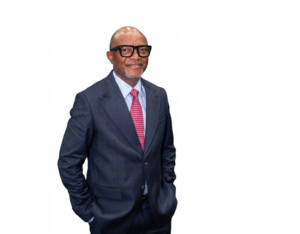
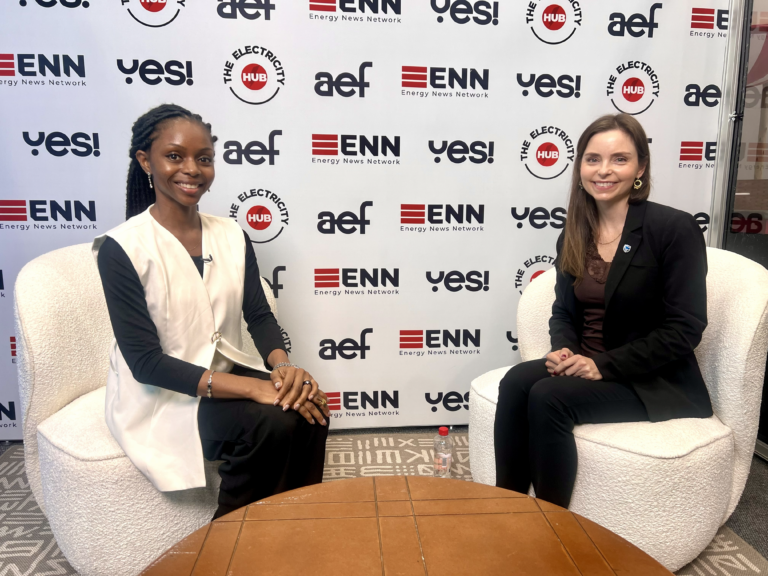
Vincenzia Leitich is Executive Vice President for Power and Renewables, Client Coverage at Standard Bank. Across two episodes of the Let’s Talk Energy Podcast she told ENN how open access has turned mining into an anchor customer for African renewables, and why transmission rather than capital is now the binding constraint.
Until recently a power project in most African markets began with a utility issuing a request for proposals, one plant built against a utility offtake, a government guarantee behind it and, depending on the country, political risk cover layered over the top. Vincenzia Leitich has spent the past two years watching that give way to open access, and with it the arrival of a private power market in which, as she told the Let’s Talk Energy Podcast, produced by the Energy News Network in partnership with The Electricity Hub, “high energy users and other corporates are able to procure power, private power, that works for them in terms of a cost and reliability perspective.”
Mining has given the shift its weight, with demand for reliable, cost-reflective power turning miners into anchor customers whose infrastructure can then be shared across a wider industrial base. “Renewable energy is becoming an industrial policy,” Vincenzia said. “Energy intensive operations locate where power is cheaper, or tariffs are reasonable, where power is reliable, and where power is scalable as well.”
What a financier is asked to fund has changed with it, because renewable resource sits where transmission does not and the two increasingly have to be financed together, because adding renewables to a grid creates a need for balancing and ancillary services that did not exist before, and because mining offtakers want baseload that only storage can supply. Storage also allows a project to hold power back until tariffs rise rather than selling everything the moment it is generated, and gas to power sits inside the same system as a dispatchable transitional source.
“You’ve got all of these different types of power systems coming together,” she said, “but with that, it comes different energy revenue stacks, which then start to become attractive for a financier.”
The fundamentals underneath have not moved, and they run to a power purchase agreement matching the tenor of the debt, clauses preventing an offtaker from walking away, an offtaker who will still exist and still be creditworthy in two decades, and regulation that holds. “When you look at project finance of these sort of assets, it’s long tenors. It’s 15 years, it’s 20 years. So it’s a long time to take risk.”
South Africa ran its earlier renewable procurement rounds to a published schedule, which let investors prepare for the round after the one in front of them, and Vincenzia points to the loss of that visibility as what stops investment, not a shortage of appetite. “That is absolutely the key enabler of growth in that space,” she said, “certain policies which are transparent, which are clear, and have a time span, which everybody knows about, and then sticking to it. Not sort of changing plans or changing rates.”
Investors continue to read African projects as riskier and slower than the numbers warrant and price in higher returns accordingly, and where the offtaker is a utility that is not bankable, sovereign guarantees have to be layered with development finance and insurance until a project becomes either too slow or too expensive to build. Against that sit some of the best renewable resources anywhere, alongside demand led by mining for critical minerals that keeps climbing.
“There isn’t a lack of capital,” Vincenzia said. “It’s just around unlocking the opportunities. When we see bottlenecks and we’re looking at projects, it’s transmission.”
Across the bank’s African regions grid connection carries significant risk, and the interconnectors the Southern African, East African and West African power pools need in order to function are, in her words, tricky infrastructure to fund and put together, though South Africa’s independent transmission programme has drawn enough appetite to suggest it can be done.
“Policy and regulation, capital will follow. It’s there, there’s appetite. It’s just around how the projects are structured and the ability to evacuate that power across regions.”
Both episodes of the Let’s Talk Energy Podcast with Vincenzia Leitich are available on ENN here.