EXCLUSIVE: ‘Investors need more than promising policies’
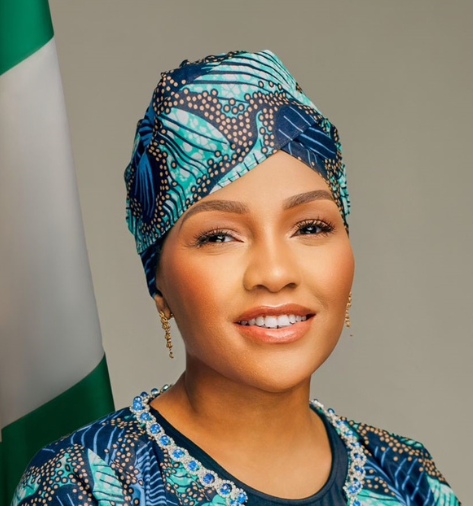
ENN’s Women’s Voices series asks women making the decisions in Nigerian energy and mining the same three questions. Princess Zahrah Mustapha Audu, Director-General of the Presidential Enabling Business Environment Council (PEBEC), opens it, telling ENN why investors should look to Nigeria’s states and why women should never lead “from a position of limitation”.
Seven of Nigeria’s states have now progressed “to the point of generating, transmitting and distributing electricity independently”, by PEBEC’s count, and the council tracks Nigeria’s state electricity markets through its Subnational Ease of Doing Business assessments.
“I believe one of the most significant investment opportunities emerging in Nigeria today is in the electricity sector, particularly at the subnational level,” says Audu. “The ongoing reforms in the sector have fundamentally changed the investment landscape by giving states greater autonomy to generate, transmit and distribute electricity within their respective jurisdictions. What this means is that we are beginning to see the emergence of new electricity markets across the country, creating opportunities for private-sector participation and investment that were previously limited.”
“At PEBEC, we have been paying close attention to how these reforms are being implemented across the states,” she says. “We are tracking the progress of states that have enacted their own electricity laws, those that have established the necessary regulatory frameworks, and those where electricity generation and distribution activities have already commenced.” Of the seven, she adds, “This is particularly encouraging because it demonstrates that these reforms are beginning to translate into practical economic opportunities. For investors, the opportunities extend beyond electricity generation itself.”
“There is considerable potential in distribution infrastructure, metering, supporting services and the broader value chain required to establish functional and commercially viable electricity markets,” she continues. “However, creating these opportunities through legislation is only one part of the equation. We must also ensure that the business environment within each state is conducive to investment. This is where PEBEC plays an important role.”
“Through our engagement with subnational governments, we continue to encourage reforms that make it easier for businesses to establish, operate and expand their investments,” she says. “We have also incorporated electricity-related reforms into our Subnational Ease of Doing Business assessments, which allow us to evaluate progress, identify implementation gaps and encourage greater accountability.”
“For me, the real measure of success is not simply the number of states that have passed electricity laws,” she says. “It is whether those reforms are creating an environment in which investors can confidently deploy capital, businesses can operate efficiently, and citizens can ultimately benefit from improved access to electricity. That is the outcome we are working towards at PEBEC: ensuring that policy reforms translate into tangible improvements in the business environment and meaningful economic opportunities.”
On what has made a difference for women in decision-making rooms, Audu begins with how she believes leadership should be defined. “I have always believed that leadership, first and foremost, should be defined by competence, clarity of purpose and the ability to deliver results,” she says. “For me, the most important thing when you enter any decision-making environment is to understand why you are there, what you are expected to contribute, and the value you bring to the conversation.”
“I think that, sometimes, we can become so focused on the question of gender that we risk losing sight of the actual responsibility before us,” she says. “My approach has always been to focus on the assignment, understand the issues thoroughly, and ensure that my contributions are informed, constructive and directed towards achieving results. That is not to suggest that gender-related barriers do not exist.”
“They certainly do, and I believe we must continue to create an environment where women have equitable access to opportunities and are able to participate meaningfully at every level of leadership,” she adds. “However, I also believe that when women are given those opportunities, our focus should be on demonstrating the depth of our knowledge, the strength of our judgement and our capacity to deliver. In my experience, credibility is built through preparation, consistency and results.”
“When people recognise that you understand the issues, that your contributions are thoughtful, and that you can be relied upon to deliver, your voice naturally carries greater weight,” she says. “I would also say that women should never feel that they have to approach leadership from a position of limitation. We should be confident in our abilities, deliberate about the value we bring, and prepared to take responsibility for the outcomes we are expected to achieve.”
“Ultimately, I do not want my contribution to be defined solely by the fact that I am a woman in a leadership position,” she says. “I want it to be defined by the quality of my work, the decisions I make and the impact of the results I deliver. For me, that is what meaningful leadership is about.”
Asked what slows a project most between commitment and building, she points to the gap between policy formulation and effective implementation, which she counts among “the biggest challenges we face”. “Nigeria has made considerable progress in establishing the policy and legislative framework required to transform the electricity sector,” she says. “The Electricity Act of 2023, for instance, represents an important step in recognising the evolving structure of the sector and providing states with the legal foundation to develop their own electricity markets. However, having the right legislation in place does not automatically translate into successful projects or a functioning market. The real challenge is ensuring that the institutions, technical capacity and commercial conditions necessary to implement these reforms are equally in place.”
“As states assume greater responsibilities within the electricity sector, there must be sustained collaboration to ensure they have the institutional structures, regulatory capacity and technical expertise required to manage these responsibilities effectively,” she says of the relationship between the federal and state governments, an area she singles out as requiring “particular attention”. “We must recognise that developing and operating an electricity market requires specialised knowledge. Not every state currently has access to the depth of expertise needed to establish the relevant institutions, regulate market activities and support the development of viable electricity projects.”
“There are individuals and organisations with substantial technical and commercial experience in the electricity industry, and we should be deliberate about drawing on that expertise to address existing capacity gaps,” Audu says, and she sees in that shortfall “an opportunity for greater collaboration with the private sector”.
“We already have Nigerian businesses and investors who understand the sector and are willing to commit resources to its development,” she adds, calling investor engagement “another important consideration”. “Rather than focusing exclusively on attracting new investment, we should also be engaging those who are already participating in the market to understand the challenges they face. What is preventing them from expanding their operations? What regulatory, institutional or commercial constraints are affecting their ability to invest further? And, importantly, what can government do to address those constraints? These are the kinds of practical questions that should inform our approach.”
“It is one thing to establish the infrastructure required to generate and distribute electricity, but it is another to ensure that consumers can afford the electricity being supplied,” she says of affordability and purchasing power, an issue “we also cannot overlook”. “For the market to remain sustainable, there must be a reasonable balance between the cost of providing electricity, the ability of consumers to pay, and the commercial viability of the businesses operating within the sector.”
“If I were to identify one overarching priority, it would be to strengthen implementation rather than continue to concentrate primarily on policy development,” she says. “We need stronger coordination between federal and state institutions, greater access to technical expertise, more structured engagement with investors, and a deliberate focus on the commercial realities that determine whether projects can succeed. From PEBEC’s perspective, this is consistent with our broader mandate of identifying and addressing the bottlenecks that make it difficult to do business in Nigeria. Ultimately, investors need more than promising policies.”
“They need an environment where decisions can be implemented, regulatory processes are clear, and projects can move from commitment to actual execution,” she says. “That is where I believe our attention must be concentrated.”