Africa nuclear power advances as small reactors suit smaller grids
Egypt expects its first reactor at El Dabaa in 2028 and Rwanda has signed for a fleet of Holtec units, while at least ten countries examine the technology. What has changed is reactor size, since a 50MW module fits a grid that could never absorb a conventional station.
Koeberg has been generating outside Cape Town since 1984 and remains the only operating nuclear station in Africa, supplying about 5% of South Africa’s electricity. Egypt is building the second. Four reactors at El Dabaa will total 4.8GW, with the first expected to run in 2028 under agreements signed with Rosatom in 2017.
At least ten more countries are now examining the technology, and what has brought them to it is reactor size. A conventional 1GW unit needs a network large enough to absorb its output and to cope when it trips, which rules out most African grids. Small modular reactors are built at around 50MW a module and assembled from factory-made parts.
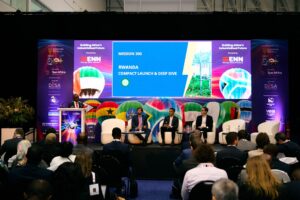
Rwanda has gone furthest. The International Atomic Energy Agency completed a Phase 1 infrastructure review there in March, and in May the Rwanda Atomic Energy Board signed with Holtec for SMR-300 units, citing a potential 5GWe fleet and first operation in the early 2030s. President Paul Kagame told this year’s Nuclear Energy Summit in Paris that the technology is evolving in ways that benefit countries with small grids, and that Africa can be among the early adopters.
Ghana intends to commission its first plant in the early 2030s, with Nuclear Power Ghana having agreed with Regnum Technology Group to deploy a NuScale VOYGR-12 unit. Kenya is engaging vendors ahead of a technology selection, its Nuclear Power and Energy Agency chief executive, Justus Wabuyabo, describing the process as receiving responses while public confidence is built. The International Energy Agency counts Ethiopia, Ghana, Kenya, Niger, Nigeria, Rwanda, Tanzania and Uganda as having plans for new plants, against a continental ambition of roughly 15GW by the mid-2030s.
Lassina Zerbo, who chairs the Rwanda Atomic Energy Board, was direct about the obstacle at last year’s World Nuclear Exhibition in Paris, saying no African country today is ready financially to implement a nuclear power plant immediately. The World Nuclear Association’s reference forecast puts Ghana and Nigeria at 1GW each by 2038 and Kenya at a single SMR by 2040.
Two things have changed around them. The World Bank ended six decades of refusing nuclear finance under an agreement with the IAEA signed in June last year, and in February the OECD Nuclear Energy Agency, the African Union and the African Commission on Nuclear Energy signed a memorandum on cooperation. Whoever lends against a first-of-a-kind reactor in a first-time market will decide how much of this gets built.