Ghana power sector puts 35 mini-grids and nuclear on its 2027 list
Ghana’s Energy and Green Transition Minister John Abdulai Jinapor has put 35 mini-grids and the Ghana Nuclear Power Programme among the priorities for 2027, after a year in which a fire at the Akosombo switchyard took more than 1,000MW off the system and more than 2,000 new transformers were procured.
Ghana’s power sector heads into 2027 with 5,854MW of installed generation capacity, 345MW of renewable energy capacity and electricity access at 89.13%, the figures Energy and Green Transition Minister John Abdulai Jinapor put before the 2026 Energy Sector Performance Review Retreat as he set the ministry’s agencies their priorities for the year.
Completing 35 mini-grids is on that list, together with more solar home systems and net-metering, clean cooking and the Ghana Nuclear Power Programme.
Anwomaso Thermal Plant now has eight of its ten units commissioned and six in service, and it is expected to generate 250MW by the end of 2026. The government has also procured more than 2,000 transformers to strengthen distribution, while Cabinet and Parliament have approved the renegotiation of independent power producer agreements.
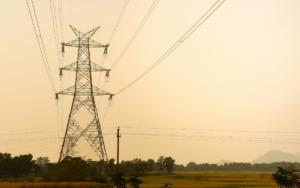
Jinapor told the retreat that “generation alone is not enough”, and the process towards construction has begun on the Ho-Asiekpe transmission line, while the scoping report and environmental and social impact assessment are complete for the Accra-Kumasi 330kV line.
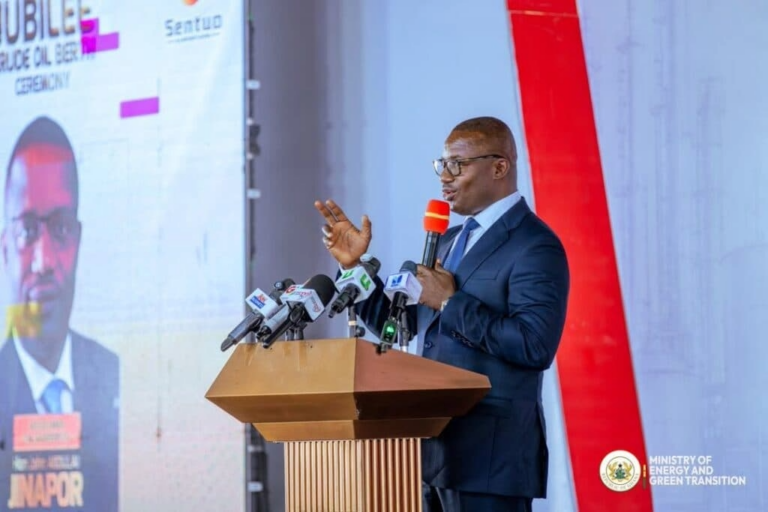
Opening the ministry’s 2026 Annual Review Meeting in Ho, he said “the Finance Minister is working with us to raise 500 million dollars” for the transmission system, alongside plans to bring the Volta River Authority’s idle plants back into service and run Akosombo at full capacity, telling the meeting that “we don’t have enough redundancy in the generation sector”.
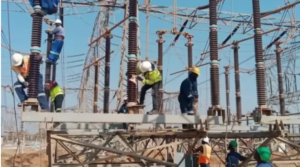
Those plans follow an April fire at the Akosombo switchyard that took more than 1,000MW off the system, and Jinapor commended the Volta River Authority and GRIDCo for their response before asking the agencies to “use the lessons of 2026 to strengthen our institutions”.
Images: Ministry of Green Energy and Transition