EXCLUSIVE: Astound Power’s Abubakar Shuaibu on why he left advocacy to build minigrids
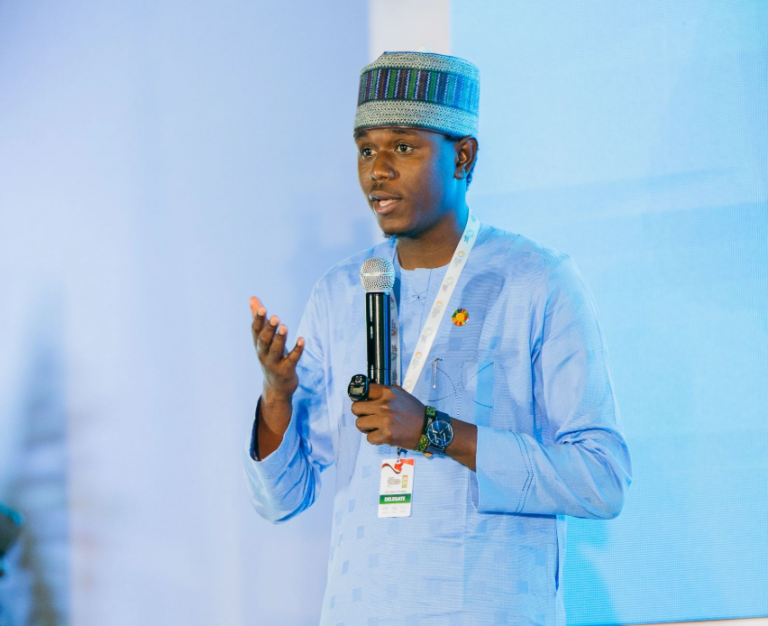
Abubakar Shuaibu spent five years campaigning on energy access in Nigeria before founding Astound Power. Speaking to ENN, he explains why he moved from arguing for connections to building them, what he says state equity changes for a minigrid developer, and where the financing still falls short for young companies.
Abubakar Shuaibu says two Nigerian state governments hold equity in his minigrid projects, that both will break ground before the end of this year, and that one is built around an agricultural cluster. He has not named the states or the projects.
“I realise there is a limit to what advocacy can do,” Shuaibu said. “I am saying you should do this, you should provide this. Then I thought about it. Okay, I am now the one doing what I am advocating for.”
Green Energy Mission Africa, which he founded and still runs, is a development organisation. Astound Power is the private company he set up to build.
“The advocacy space has given me the leverage to have that high level of connection, so I was able to convince the state governments to come together and deploy this project.”
Development finance was disappearing while he made the move. “When Donald Trump came into office he unilaterally walked the US out of the Paris agreement. USAID is gone. The UN is highly underfunded. The European Union is facing existential threats from the war in Ukraine to the war in the Middle East, so everybody is shifting priority. The EU is focusing more on defence.”
“Whatever you are doing depends on you being able to access financing and have people that sponsor your project as a development project. One day somebody will come and say I don’t like this, and everybody will fold his arms.”
“Business is business. As long as you get a project, there is finance across the world for the private sector, and there will always be availability of financing. The moment your project meets the requirements, there are financiers, there are people willing to put in money.”
He describes Astound Power as structured as a public private partnership, with the state governments taking equity and contributing part of the financing. Agriculture is where he says one project points.
“One of the reasons the Nigerian agricultural market is still not great with potential is lack of energy. You need energy for education, you need energy for agro-processing, you need energy for production.”
Shuaibu is direct about how the sector sees people his age. “The global community doesn’t really care about young people. What it cares about is profit. They care about projects that can sustain and provide profit, solve problems. Nobody cares about the level of advocacy you do, because you can advocate but you cannot implement.”
More advocacy, not less, is what he wants from the young Nigerians still doing it. “It is going to go a long way in pushing pressure on the government and shaping the policies.” Plastics is where he takes the argument next.
“If somebody is going to turn the pollution into money, that is two things. You are making money and you are solving the problem. If I sit down and say I am advocating for plastic pollution, that is a different thing, and one of them will make more impact.”
Qualification criteria stop most of them getting there. “There are a lot of young people in countries like mine, but they are struggling with financing and meeting criteria, because the way things are structured it is almost impossible for a young company to grow. The global community looks at our inexperience, they look at our age, and they say you can’t handle this kind of project. He doesn’t have the experience. But we have the talent.”
“In three years, Astound Power is going to be the largest renewable energy company led by a young person and owned by a young person, and we are going to be one of the best in Africa.”
“The only way we can prove them wrong is to do it. Commission the projects, have the best projects, continue to provide a quarterly or yearly impact of how our projects are impacting the communities. Then we can say, you have to make sure that for every financing, you give room for young people to access this kind of financing.”