EXCLUSIVE: Europe’s carbon border could open a market for CCS in Africa
By John McLaughlin, Storegga
John McLaughlin of Storegga argues that the near-term case for carbon capture and storage in Africa rests on exporters facing the EU’s carbon border, with North African stores for southern European emissions and credits for carbon removal as later possibilities, and sets out what governments can do now to prepare.
Since 1 January 2026 the European Union’s Carbon Border Adjustment Mechanism (CBAM) has put a price on carbon-intensive imports, and for African exporters in the sectors it covers that price may be where the nearest business case for carbon capture and storage in Africa begins.
CBAM is one of three potential drivers for carbon capture and storage on the continent, and the other two, the import and storage of CO₂ captured in southern Europe and the production of carbon dioxide removal credits, follow in turn below. A national carbon price might in future add a further rationale, although only South Africa has so far implemented a national carbon tax and the price outlook there is insufficient to justify carbon capture and storage.
What the carbon border changes for exporters
The mechanism exists so that EU producers subject to the Emissions Trading System (ETS) are not disadvantaged by foreign producers facing no comparable carbon charge, and it covers iron and steel, cement, fertiliser, aluminium, electricity and hydrogen. Its phase-in mirrors the withdrawal of free allowances from EU producers under the ETS, currently scheduled to end in 2034 although proposals before the European Parliament would stretch that to 2038, so some African exports to the EU already carry a price tied to the prevailing EU Allowance (EUA) price, and the amount payable rises each year as the phase-in proceeds.
A cement and clinker producer in Algeria or Egypt that sells mainly into the EU might consider installing carbon capture facilities and developing permanent geological storage for CO₂ close to the plant, which would reduce the CBAM charge on its exports. Against European cement makers facing the same ETS, such a producer might benefit from structurally lower construction and operating costs, energy included, and from larger modern plants, with lower storage costs as well if suitable onshore sites can be identified. Exporters to the EU in the covered sectors are the industries that may have the most to gain from access to lower cost carbon capture and storage.
Southern Europe’s CO₂ and North Africa’s stores
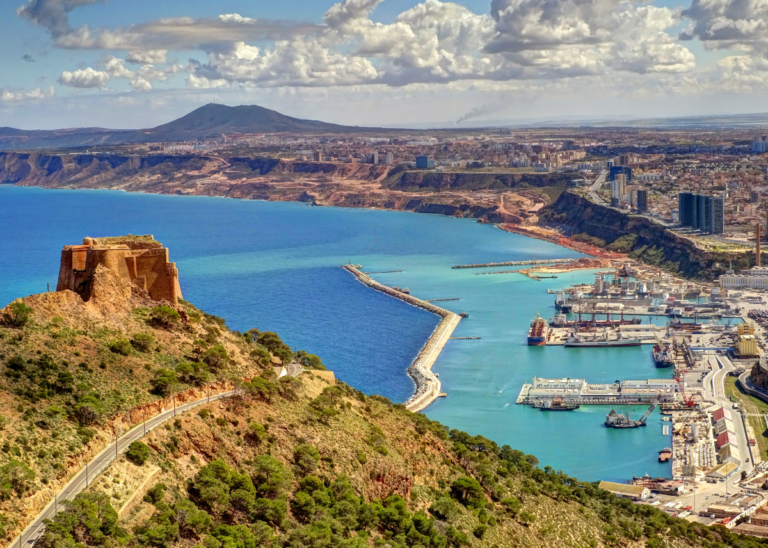
The North Sea is estimated to offer about 80Gt of storage in Norwegian waters and a similar volume in UK waters, a potential sink for hundreds of years of CO₂ from hard-to-abate sectors, so CO₂ captured onshore in Northern Europe will most likely find a suitable store there. The Mediterranean appears less well endowed with suitable storage geology, which makes North Africa an appealing location for emitters in southern Europe’s hard-to-abate sectors.
Shipping CO₂ as a liquid aboard carriers of 20 to 40kt avoids the challenges facing large pipeline networks and gives commercial flexibility, and CO₂ imported into North Africa could be used for enhanced oil recovery or stored in aquifer structures or depleted oil and gas fields. The business case would depend heavily on port infrastructure and proximity to a suitable store, and on whether emitters can afford the cost.
Credits for carbon removal
Carbon dioxide removal credits (CDRs) are currently associated with the voluntary market and could be generated through direct air capture (DAC) with carbon storage, biogenic emissions capture with carbon storage (BECCS) or biochar burial, technologies the EU’s Carbon Removals and Carbon Farming Regulation describes in more detail. Annual volumes remain very small though they are growing quickly, and reported prices are substantially above those of EUAs. Proposed changes to the ETS aim to allow CDRs into the scheme but would limit them for now to credits produced domestically, although a review around 2033 and 2034 might consider international credits.
Artisanal biochar production in Africa is nonetheless progressing, with several entities working on the metering, measurement and verification needed to certify a biochar credit. At industrial scale, CDR production tends towards BECCS because DAC appears considerably more expensive, but in Africa BECCS faces limited transport infrastructure for biomass, electricity and distributed heat, as well as competition with food production for land, water and other resources among other constraints, and proximity to a suitable store requires granular evaluation.
No BECCS facilities are in development or operating in Africa, as might be expected, and studies remain at an early stage. A BECCS investment is unlikely to be justified on CDR revenue alone, with revenue from electricity or distributed heat likely to play an important part in the business case, and that distribution would in turn depend on a power or heat network.
What governments can do now
African governments can prepare while the global landscape for CCS continues to evolve, as it would be expected to for a nascent industry, starting with regional geological studies to map where CO₂ could be stored and how good and how large each store might be, so that the map can be laid over the locations of point-source emitters and transport infrastructure, among other factors, to show where the potential is highest.
Licensing of CO₂ storage exploration and development can be legislated for, typically building on the processes already used for oil and gas, although the value chain from emitter to store is much weaker economically than that for oil and gas, so the state’s ability to capture value through royalties or taxes is likely to be much smaller. Port development plans, meanwhile, can account for the need and opportunity for CCS from the outset.

About the author: Dr John McLaughlin has more than 30 years of energy sector experience in Europe, the UK, Australia, South East Asia and West Africa. He began his career with Shell, moving from technical and operational roles into commercial, economics and strategy roles, with responsibility for new business development, deal delivery and regional commercial management. He first worked on CCS 23 years ago on the Gorgon LNG Project in Australia, and at Storegga he has held senior roles with experience in direct air capture, blue hydrogen and CCS in the UK, Europe and Asia.