
EXCLUSIVE: Nedbank on financing South Africa’s open electricity market
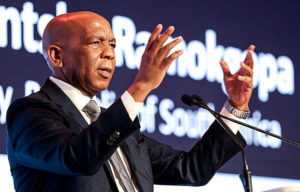
Hlatse Nkune is Principal, Energy Finance at Nedbank CIB, which reached financial close with Yellow Door Energy on the 49MW Lion Thorn Solar Park this month. Speaking to ENN, he sets out what the bank is financing now and how open access changes the way a lender underwrites an offtake.
Lion Thorn, 49MW at Leeudoringstad in North West, reached financial close this month with power contracted to the building materials group PPC and the private trader POWERX, and Hlatse Nkune traces its bankability to the commercial structure more than the financial model.
“It’s usually the strength of the commercial structure,” he says, pointing to long-term offtake alongside an EPC contractor with the track record and balance sheet to finish on time. Operations weigh as heavily in his account, since the revenue being banked is the revenue the plant produces, and he looks at what the structure does if an offtaker fails and the project has to find another.
The bank’s year runs from a set of battery projects under the government’s storage procurement to six utility-scale projects closing under the seventh renewables bid window. One combination of 300MW of solar with almost 660MWh of storage is, in his account, among the largest Nedbank has financed. Private generation registered with Nersa represented an estimated R158 billion of investment and 7,464MW in 2025.
Nedbank was lending into commercial and industrial projects before the licensing threshold was lifted, when private generation was capped at one megawatt, and built portfolio structures to make those projects financeable. It now lends at company level as well as project level, to developers whose funding and guarantee needs have outgrown any single project.
Traders are becoming more dominant as power is aggregated, he says, and POWERX at Lion Thorn was one of them.
Before the bank commits, he applies a plainer test than the formal criteria, asking who builds the project, who operates it, who buys the power and whether the cash flows carry what is being lent. “You need to believe the cash flows, and you need to understand, if there is a risk, how that risk is being mitigated,” he says.
Open access, wheeling and private trading change the lens, since project finance was historically built on one long-term offtake and the credit of that counterparty. “In an open market, you are actually banking on a market,” he says, describing a blend of stronger and weaker offtakers on shorter contracts, where the average life of the portfolio matters more than any single term. Security packages move with it, since termination cover buys the time to find a replacement offtaker rather than repaying the debt in full.
Zambia is the market he is watching most closely north of the border, and he has met senior people at the utility, describing a government working to broaden a mix that leans on hydropower and is exposed when the rains fail. Two utility-scale projects there are being worked towards close, he says, and the bank will be at the Zimbabwe-Zambia summit in Livingstone to meet developers.
By the end of 2027 he wants wheeling working effectively and the grid reliably accessible, since curtailment moves the cash flows a lender has predicted. “We want to see the market being functional, people getting power at a reasonable price and also getting reliable power,” he says.
Images: Nedbank