Powering Mission 300: How the World Bank Group is Mobilizing Private Capital for Africa’s Energy Future
More than 50 million people across 40 countries in Sub-Saharan Africa have gained access to electricity through Mission 300, a joint initiative of the World Bank Group (WBG) and the African Development Bank (AfDB) that aims to connect 300 million people to electricity by 2030.
The milestone reflects accelerated progress in both on- and off-grid electricity access, supported by investments across the energy value chain, from generation and transmission to distribution.
The WBG and AfDB are combining financing, policy reforms and technical expertise to expand energy access, support economic growth and create more high-quality jobs across the continent. Innovative financing solutions that attract private investment, together with government-led reforms, public investment and financing from the WBG, the AfDB and other partners, are laying the foundations for economic growth and job creation in Africa and will be critical to reaching those targeted under Mission 300.
Investments and financing packages from the International Finance Corporation (IFC), a member of the WBG, are helping to accelerate the pace of connections. Three recent IFC investments demonstrate how innovative financing is working to close Africa’s energy access gap: a securitized social bond in Côte d’Ivoire, Zafiri, a patient-equity vehicle for distributed renewable energy companies, and Release by Scatec, which deploys modular solar and battery storage solutions.
Côte d’Ivoire: Expanding Universal Electricity Access
Nearly 2.8 million people in Côte d’Ivoire are expected to benefit from more than 600,000 electricity connections through the country’s Electricity for All Program (PEPT), helping make electricity more affordable and accessible for low-income households and small businesses.
IFC provided guarantees of up to XOF 15.8 billion (US$28.3 million) for the second social bond issuance under the government-led programme. The innovative securitized bond structure converts future payments from household electricity connections into immediate funding, building on the first PEPT social bond supported by IFC in 2023, which financed an additional 400,000 connections.
The investment is supported by the IDA Private Sector Window and is complemented by IDA’s US$300 million National Electricity Digitization and Access (NEDA) project.
By providing guarantees rather than direct financing, IFC helped mobilize US$79 million from domestic and international investors through local capital markets. The project supports affordable connections in underserved communities through the grid and contributes to Côte d’Ivoire’s efforts to achieve universal access to electricity by 2030.
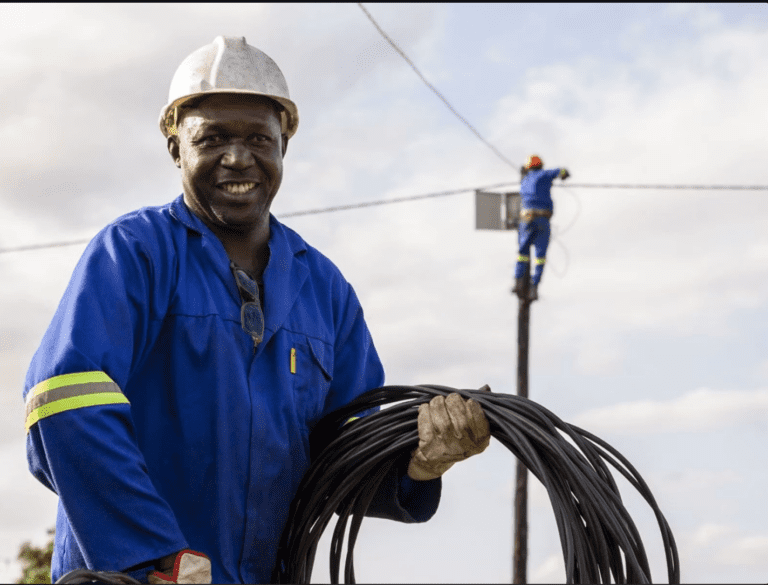
Reliable electricity is helping power small businesses, improve productivity and expand economic opportunities across Côte d’Ivoire.
Zafiri Addresses Africa’s Distributed Renewable Energy Equity Gap
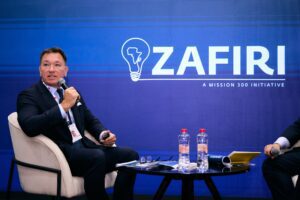
Zafiri, Mission 300’s flagship permanent capital vehicle, aims to support new electricity connections and clean cooking access for 10 million people by 2030 and 30 million people over its lifetime by helping distributed renewable energy companies expand in underserved markets across Sub-Saharan Africa.
The US$300 million blended finance equity investment vehicle had secured US$176 million in committed capital as of the second quarter of 2026, marking a significant mobilisation milestone.
The platform brings together support from across the World Bank Group and its partners. IFC led its development and is providing an anchor investment of US$120 million in both commercial and concessional capital. Under the ASCENT programme, IDA is providing concessional financing of US$55 million for the Trade and Development Bank’s investment.
Co-investment has also been provided by the African Development Bank, Nordic Development Fund, FirstRand Group and two U.S. foundations.
Through the World Bank Group Guarantee Platform, MIGA is developing an approach to efficiently support Zafiri with de-risking solutions aligned with market needs. Together, these contributions are attracting private capital into high-impact markets while supporting long-term financial sustainability.
IFC is now looking to adapt the equity model for other sectors critical to Africa’s development, including digital access, healthcare and e-mobility.
Release by Scatec Accelerates Renewable Energy Deployment
IFC has committed a US$165 million financing package for Release by Scatec, which offers modular solar photovoltaic and battery storage solutions through pre-financed and standardized legal and technical structures for utilities.
Using a leasing model, Release enables utilities to rapidly deploy renewable power where it is needed most, lowering costs, improving cash flows and reducing reliance on fossil fuels.
To date, IFC has provided US$100 million in long-term debt financing for Release deployments in Cameroon, Chad and São Tomé and Príncipe, while MIGA has provided US$65 million in liquidity support guarantees covering government obligations under lease arrangements.
While Release provides rapid energy supply needed immediately for utilities, IDA continues to work with governments on the policy, planning and development of competitive power generation procurements with the private sector to lower energy costs to consumers over the long term.
Together, these programmes help ensure least-cost development plans are pursued in line with government objectives.
Modular solar PV and battery systems deployed through Release by Scatec are helping public utilities deliver reliable electricity in underserved areas as part of Mission 300.
Energy Access as a Catalyst for Growth
Mission 300’s goal to connect 300 million Africans by 2030 represents a transformative step toward unlocking the continent’s full potential.
By combining resources, expertise and innovative financing, the World Bank Group and the African Development Bank are delivering affordable, reliable power to communities that need it most.
The initiative highlights how energy access can fuel economic growth, strengthen infrastructure and create opportunities that extend far beyond power lines and solar panels, helping to lay the foundation for decades of sustainable development across Africa.