Cutting the cost of Africa’s energy transition with the right flexibility mix
Why a hybrid approach to flexibility will deliver better outcomes for Africa’s renewable grids than batteries alone. By Kenneth Engblom, Vice President, Wärtsilä Energy.
Africa’s energy transition is entering a decisive phase. With some of the world’s best solar and wind resources, the continent is well positioned to leapfrog into a low-cost, renewable-powered future.
As policymakers and planners accelerate deployment, one misconception often skews the debate, the idea that battery energy storage systems alone can provide the flexibility needed to balance high shares of intermittent renewables. That assumption is incomplete, and it risks making Africa’s energy transition more expensive, less reliable and slower.
The real question is not whether storage is needed. It clearly is. The question is whether storage alone is sufficient, and the answer, increasingly supported by system-level evidence, is no.
Flexibility is not one thing
Power systems do not require a single type of flexibility. They require several layers of it. As renewable penetration rises, so does variability, with solar and wind introducing fluctuations on timescales from milliseconds to seasons. Addressing that requires technologies able to respond across all those intervals.
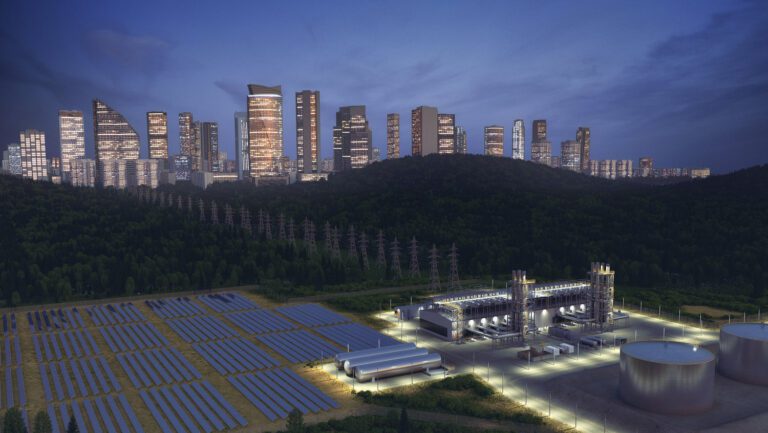
Battery storage is exceptionally well suited to fast-response services, delivering sub-second balancing, frequency control and short-duration energy shifting. That is one part of the flexibility spectrum. Longer-duration balancing, covering evening peaks, multi-day renewable shortfalls or seasonal variability, calls for a different capability, dispatchable and scalable power that can run when needed for as long as needed. This is where flexible engine power plants play their part, providing grid balancing at the minute, daily and seasonal level when neither renewables nor storage can meet demand. Battery storage and engine capacity are not competing solutions. They are complementary ones.
The cost of over-relying on storage
The belief that storage alone can deliver system flexibility often ignores a basic economic reality. Storage costs scale with duration. Short-duration batteries are increasingly cost-effective, but extending storage to cover longer gaps, such as multi-hour evening peaks or prolonged periods of low output, quickly becomes prohibitively expensive.
This matters in African contexts, where demand is growing rapidly, grids are often weak, financing costs are high and reliability constraints are central. Designing a system around storage alone to cover every flexibility need means oversizing battery capacity for rare but critical events, which leads to underutilised assets and higher total system costs. Combining storage with flexible engine capacity lets each technology do what it does best, minimising overall investment while maximising reliability.
This is not theoretical. Detailed power system modelling across African markets consistently shows that the optimal mix of renewables, storage and flexible engines delivers the lowest total cost of electricity while maintaining stability.
Africa’s reality demands pragmatism
The debate around flexibility is often shaped by perspectives from mature, highly interconnected power systems, but Africa’s starting point is different. More than 500 million people still lack access to electricity, and many grids operate with weak infrastructure. In that context, reliability is not a marginal issue. It is foundational. A system that cannot guarantee power when the sun sets or the wind drops will not support industrialisation or economic growth, nor will it attract the investment needed to scale renewables.
Flexible engine capacity offers a practical solution. It can be deployed quickly, scaled modularly and operated efficiently at partial loads, which makes it well suited to complement intermittent renewables in emerging systems. As experience in several African markets has shown, integrating renewables with flexible gas engines can reduce both costs and emissions compared with traditional baseload alternatives.
Avoiding a new form of carbon lock-in
A common concern is that investing in engine-based capacity risks locking Africa into fossil fuels. The concern is understandable but increasingly outdated. Modern engine power plants are designed to run on a range of fuels, natural gas today and sustainable fuels tomorrow as green hydrogen, ammonia and synthetic fuels become mainstream. Engine power plants therefore serve as a bridge rather than a barrier to a zero-carbon future, enabling higher renewable penetration today while remaining compatible with decarbonisation over time.
Rethinking the role of flexibility
The real risk for Africa is not deploying flexible engines. It is failing to deploy enough flexible capacity of any kind. Some influential narratives, including recent continental outlook reports, acknowledge the importance of storage and gas-to-power yet still underestimate the system-wide value of flexible engine technology in enabling high-renewable systems at lowest cost. That gap matters, because systems designed on incomplete assumptions about flexibility risk being either too expensive or not resilient enough.
A balanced path forward
Africa does not need to choose between storage and engines. It needs to combine them intelligently. Renewables provide the lowest-cost energy, batteries provide fast short-duration flexibility, and flexible engines provide long-duration, dispatchable capacity. Together they form a system that is cleaner, more affordable and more reliable. The energy transition is not about maximising one technology. It is about optimising the whole system, and for Africa that means a pragmatic, hybrid approach that recognises flexibility as multi-dimensional, with no single solution able to deliver it alone.