
Tanzania clean cooking rollout puts 400,000 LPG cylinders into public institutions
The distribution carries 50% subsidies and tax exemptions, and reaches rural communities alongside public bodies. It arrives while the IEA warns that the fuel underneath every LPG programme on the continent is exposed to a shipping route thousands of miles away.
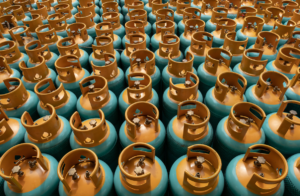
Tanzania has distributed 400,000 LPG cylinders to public institutions and rural communities, supported by 50 per cent subsidies and tax exemptions. The national initiative was announced at SADC Sustainable Energy Week in Victoria Falls this year and sits under the country’s Mission 300 commitments, which target 75 per cent clean cooking access by 2030.
Cylinders are the part of clean cooking that is easiest to count and hardest to sustain. Roughly a billion people in Africa still cook on wood and charcoal, and the fuel that replaces it now travels a route that has proved fragile. Disruption to shipping through the Strait of Hormuz earlier this year affected around 30 per cent of globally traded LPG, the primary cooking fuel for more than 3.4 billion people worldwide.
The IEA’s response was to launch the Clean Cooking Security Programme on 9 July, offering technical assistance to countries seeking to improve fuel security and looking at how international cooperation on supply chains might be strengthened. The same meeting carried $900 million in new pledges, taking commitments past $3.1 billion, with Fatih Birol confirming that $740 million of the 2024 Paris money has been deployed across 22 African countries.
Zimbabwe’s compact sets out what the domestic side of that equation costs. Its National Clean Cooking Strategy needs approximately $791.5 million for stoves alone at December 2023 prices, with a further $6 million annually from 2024 to keep pace with population growth. The funding split it proposes is instructive, with 44 per cent expected from users themselves across low, middle and high income segments, 7 per cent from suppliers through credit and microfinance, and 49 per cent from development partners. The country imports an average of 2,692 tonnes of LPG a week against daily consumption of 165 tonnes, and 61 per cent of households still rely on firewood.
Money has also gathered around the delivery models rather than the pledges. TotalEnergies committed more than $400 million to LPG for cooking with an ambition of reaching 100 million people in Africa and India by 2030, built on pay-as-you-cook technology that lets a household buy gas in the amounts it can afford rather than a full cylinder at a time. The Rockefeller Foundation, the Global Energy Alliance for People and Planet, the Clean Cooking Alliance and Energy Corps launched a Clean Cooking Accelerator Initiative at the IEA’s 2026 Ministerial aimed at supply chains and infrastructure.
The second Summit on Clean Cooking in Africa was due in Nairobi in July and has been postponed to later this year, co-chaired by Kenya, Norway, the United States and the IEA. Tanzania has shown what a government can put into households when it subsidises the cylinder. Whether the gas inside it keeps arriving is now a question about somebody else’s sea lane.