Tanzania holds 57tcf and a licensing round while its LNG agreement stays unsigned
Shell and Equinor have been targeting a host government agreement on the $42 billion Tanzania LNG project, with first production expected in the early 2030s. The country opened 26 blocks in its first licensing round in more than a decade, and its 2,115MW hydropower plant now supplies four countries.
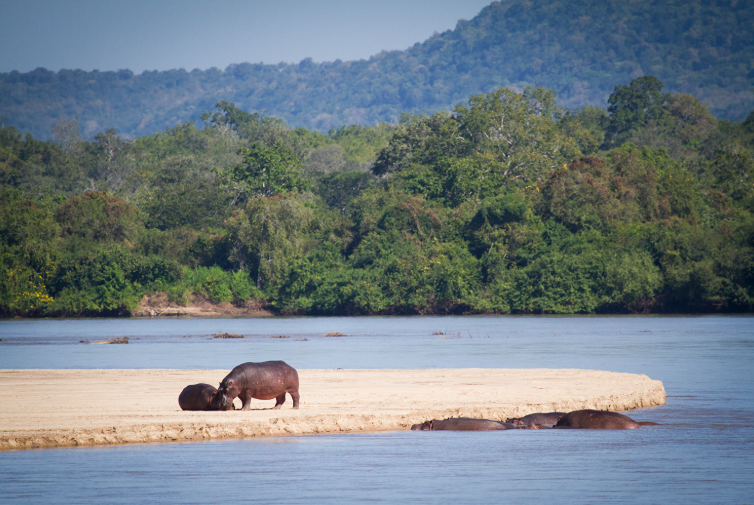
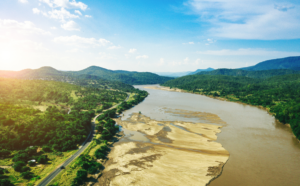
Nine turbines of 235MW each sit on the Rufiji River at the Julius Nyerere Hydropower Plant, giving Tanzania 2,115MW from a single $2.9 billion asset designed to supply Kenya, Uganda and Zambia as well as its own grid. Six were commissioned in 2024. Tanzania has become an exporter of electricity while its far larger gas prospect remains unsigned.
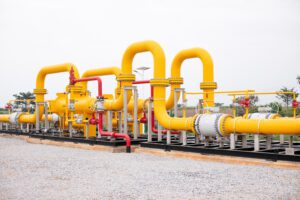
Around 57 trillion cubic feet of gas sits offshore, and the Tanzania LNG project led by Shell and Equinor carries a $42 billion estimate with first production expected in the early 2030s. A host government agreement has been targeted for mid-2026. Until it is signed, nothing behind it moves.
Tanzania also opened its first licensing round in more than a decade in mid-2025, covering 26 blocks. Running a licensing round while the anchor project remains unsigned is a deliberate order of business, since a country with an active round demonstrates that its terms are negotiable and its geology is open, which is a different signal from one waiting on a single counterparty.
The distinction between the two assets is worth holding. The hydropower plant exists, generates and exports today. The gas is a decade from production on the most optimistic reading, and the difference between those horizons is what makes the host government agreement so heavily negotiated. A country with power flowing across four borders has less pressure to concede than one with nothing.
That position also places Tanzania as a long-term supply option rather than a near-term one. Buyers looking for volume before 2030 will find it in Mozambique, Nigeria or Algeria. Buyers building a portfolio into the 2030s are a different conversation, and one Tanzania can afford to take slowly.
What the licensing round and the LNG negotiation share is a question about terms rather than resource. The gas is confirmed and the interest is confirmed. What has not been settled is what Tanzania keeps.