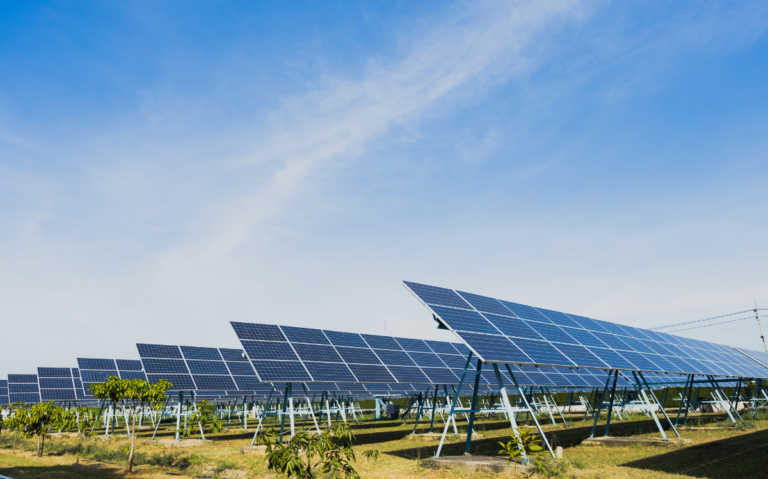
EXCLUSIVE: Sunports Energy solar plant turns its Mashonaland East feeder into a net generator
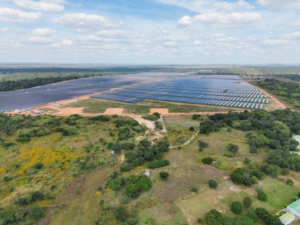
Trymore Sharata, Director of New Sahara Ventures, tells ENN that the first 5MW from the Sunports Energy solar plant in Mashonaland East has effectively turned its local feeder into a net generator, and sets out how the site will grow towards more than 100MW in blocks of 20MW.
The feeder that links the Sunports Energy solar plant to the ZETDC network in Mashonaland East has “effectively transitioned from being a net consumer of electricity to becoming a net generator” since the plant’s first 5MW began exporting into Zimbabwe’s grid, Trymore Sharata, Director of New Sahara Ventures, told ENN. With that change in its standing, he said, the feeder is “far less likely to be placed on routine load-shedding schedules”, and he expects the result to be “improved power reliability and a tangible economic and social benefit to the Beatrice community and surrounding areas”.
Power from Sunports goes into the national grid, where it is available to consumers anywhere in Zimbabwe and within the Southern African Power Pool if exported, though Sharata expects the businesses nearest the plant, Kefalos and Caroline Farm among them, to be among the first to benefit. “A significant portion of their electricity demand can now be met by generation located within their own vicinity rather than relying solely on power transmitted from distant generation centres such as Hwange and Kariba,” he said, and he expects the plant to offset about 600 tonnes of carbon dioxide a year.
Sahara Renewables Group, based in Botswana, is also behind the project, and Sharata describes its participation as “an additional layer of investor security”, showing that Sunports “has attracted support from an established regional renewable energy player with a strong understanding of energy investment and project development”. In his view the group’s involvement tells prospective investors that “internationally recognised standards of oversight, accountability and risk management are being applied”.
Sunports has been designed as a scalable utility-scale development with a long-term target of more than 100MW, and Sharata said expansion will come in successive 20MW blocks that “can also be implemented simultaneously”, each needing capital for the solar generation, civil works, grid interconnection and operational support systems. The pace, he said, “depends on the successful mobilisation of investment funding”, and he expects later stages to find capital more easily now that the first phase has shown the project is viable.
Interest has already come from “a number of reputable local and international investors” who, Sharata said, recognise the strength of the business model and the quality of the underlying asset. “We welcome additional strategic investment partners who wish to participate alongside established investment institutions in scaling one of Zimbabwe’s flagship renewable energy developments,” he said.