Can Enugu price 100MW of solar at a tariff its people can afford?
Eauxwell Nigeria has put a $200m programme for 100MW of distributed solar with battery storage to Enugu State. Governor Peter Mbah welcomed it but wants the investors’ tariff assumptions reviewed first. The state’s regulator has set Band A at ₦160.4 per kWh, and the state is building out its own grid.
In October 2024 Enugu became one of the first three Nigerian states, alongside Ekiti and Ondo, to take over regulation of its own electricity market under the Electricity Act 2023. Its regulator, the Enugu State Electricity Regulatory Commission, now sets end-user tariffs for the state’s distributor, MainPower, which buys all of its supply from the national grid.
The commission has set MainPower’s Band A tariff at ₦160.4 per kWh, on the assumption of a generation price of ₦45.75 against a current average of ₦112.60. The Nigerian Electricity Regulatory Commission has questioned the order on that basis, and under the state’s arrangement, tariff support for end users rests with the Enugu State Government.
In August the Enugu State Electrification Agency began building three 33kV feeders out of the Transmission Company of Nigeria’s Ugwuaji station. Two are new lines into Nkanu East and Nkanu West, and the long Amechi feeder is being reconfigured to serve Awgu and Aninri. Christopher Ezeoha, who runs the agency, said communities there, including Nkerifi and Mburubu, had been without electricity for more than 20 years, and that the agency hopes to deliver more than 20 hours of supply a day.
The same network is being prepared to carry power from a proposed 630MW generation facility. A state-owned vehicle, Enugu Electrification Agency Ltd, is set to distribute power in Nkanu East and Nkanu West first and eventually across the state.
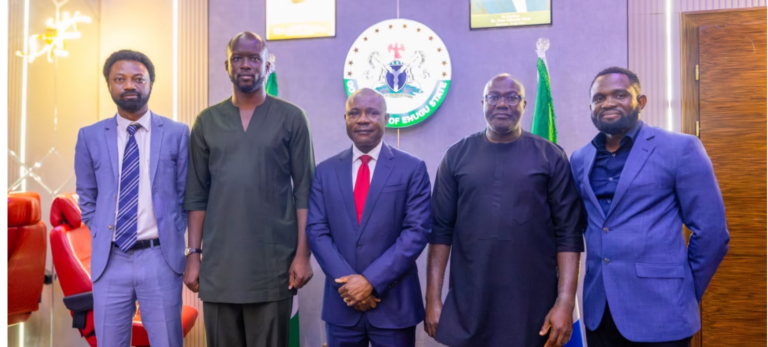
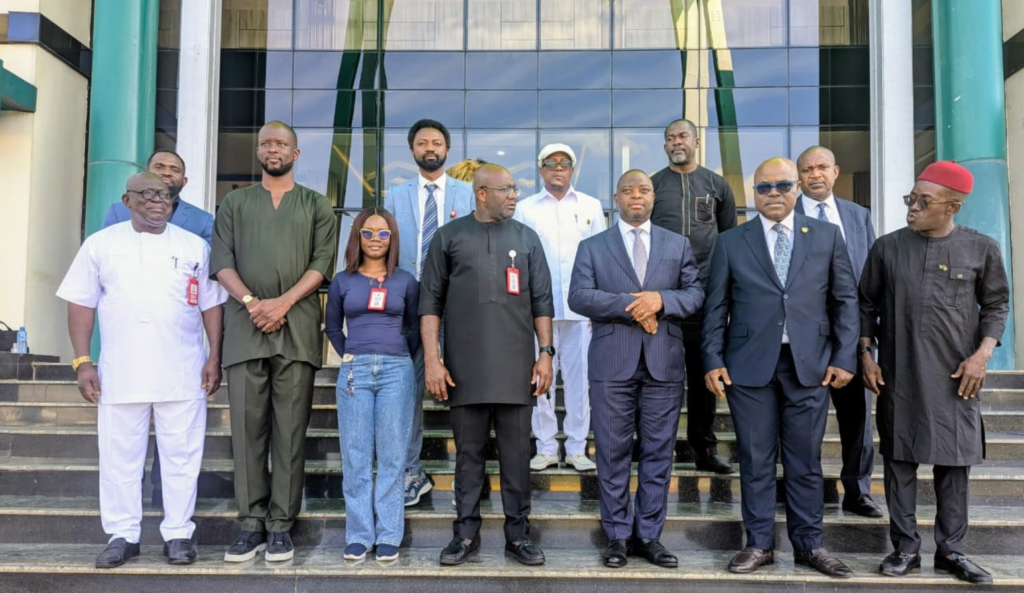
On 8 October, Eauxwell Nigeria Limited, led by its managing director Edwin Enwegbara, presented a $200m programme for 100MW of distributed solar with battery storage at Government House in Enugu, an investment the state puts at about ₦300bn. The deal came through the Climate and Development Investment Platform, coordinated by Professor Chukwumerije Okereke, and the state describes it as the platform’s first major investment.
Eauxwell has worked on solar for public institutions before. According to World Bank procurement records, it won a $6.1m contract under the World Bank-financed Nigeria Electrification Project to develop solar hybrid systems for universities and teaching hospitals.
Chijioke Okonkwo, chairman of the state regulator, attended the meeting, and Olufemi Akinyelure of the Rural Electrification Agency joined online to explain DARES, the World Bank-backed programme for distributed renewable energy. Mbah also asked for an urgent meeting with Aninri’s traditional ruler and President-General to settle land issues holding up a separate electrification project there.
“We want an electricity market that encourages competition and gives consumers the benefit of competitive pricing,” Mbah said. He asked for a shorter timeframe for delivery and a review of the investors’ tariff assumptions, with the final tariff to be set with the relevant regulators. “Cost recovery is important, but we must also ensure that the tariff is affordable to our people and businesses.”
Images: Enugu State Government