
Solar Manufacturing Africa: Ghana Calls for Local Production
Ghana’s Energy and Green Transition Minister John Abdulai Jinapor has called on African countries to develop domestic solar manufacturing, arguing that the continent’s renewable energy ambitions must extend beyond installing imported equipment. Speaking at the International Solar Alliance Assembly in India, he identified technology transfer, local industrial capacity and affordable long-term finance as requirements for building an African solar industry.
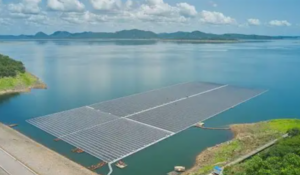
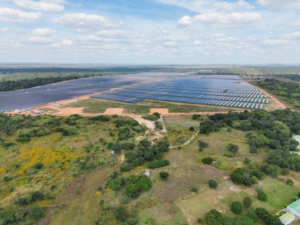
Ghana has more than 150MW of utility-scale and floating solar capacity connected to its national grid, according to Energy and Green Transition Minister John Abdulai Jinapor, who wants the continent to capture a greater share of the industry behind the technology.
Addressing the ninth session of the International Solar Alliance Assembly in India on 5 November, Jinapor argued that Africa’s solar ambitions should extend beyond deployment to the manufacture of equipment and the development of local supply chains.
The minister said recent disruption in global energy markets had reinforced the importance of reducing dependence on imported fuels. Developing domestic solar production, he argued, would give African countries a greater degree of energy security while creating opportunities for industrial development.
“This will require technology transfer, local industrial capacity and, critically, affordable long-term financing,” Jinapor said.
Ghana is pursuing several strands of solar deployment, including solar streetlighting, rooftop installations and policies to transition critical public facilities to solar power. Jinapor also cited off-grid systems supplying electricity to island communities.
The distinction between installing solar capacity and manufacturing the equipment used to generate electricity is central to his argument. A growing market for solar installations does not automatically create a domestic manufacturing industry, particularly where equipment, technology and financing continue to depend on external suppliers.
Building that capacity would require investment in production facilities, skills development and the transfer of technology, alongside financing that allows manufacturers to compete.
Jinapor said Africa should become a producer of solar technology rather than remain a consumer of it, describing the continent’s solar resources as an opportunity to support industrialisation and employment.
“Our abundant sunshine must become a catalyst for industrialisation, job creation, economic resilience and energy sovereignty,” he said.