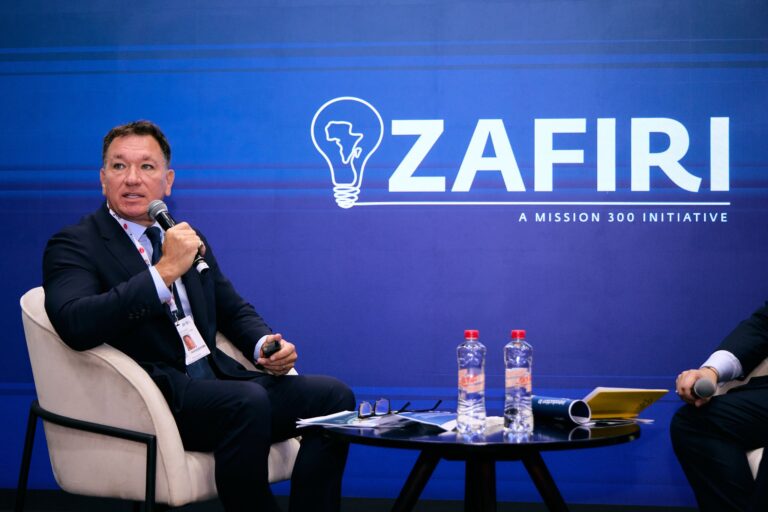
Zafiri’s Wayne Keast on proving Africa’s off-grid sector can stand on its own
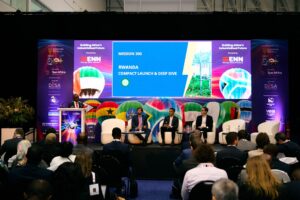
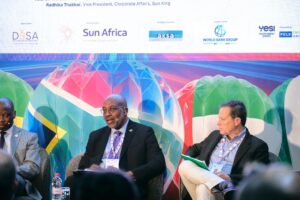
The real test for Zafiri is whether it can show, over the next few years, that distributed renewable energy is a bankable asset class, one that draws in commercial capital rather than leaning on subsidies. That was the case made by Wayne Keast, Managing Partner at Inspired Evolution, the fund’s investment manager, speaking to ENN at the Africa Energy Forum.
Keast was careful to separate Zafiri from the wider Mission 300 effort it supports. Mission 300 is the broad programme led by the World Bank Group and the African Development Bank with their partners, and it carries everything from grid expansion through to policy reform. About half of its connections are expected to come from grid expansion, which is why he sees the country compacts and the policy commitments behind them as so central to whether it succeeds. Zafiri sits inside that bigger picture as the flagship equity vehicle, putting patient capital to work alongside the development banks.
Asked why so few distributed energy companies have reached scale when millions of people have been connected, Keast was clear that it is not a case of the market getting it wrong. These companies sell to the bottom of the wealth pyramid, where affordability is a genuine constraint and revenues move with currency and interest rates. Companies are connecting people steadily, he said, but population growth keeps pace, which is why the figure of roughly 600 million people without electricity, five of every six of them in Africa, has remained largely unchanged. What the sector needs is patient capital alongside other measures that make the product affordable.
The way Zafiri is built speaks directly to that. Keast explained that concessional first-loss capital sits across half the tranche, and the point of it is not to hand cheap money to the underlying companies. It is there to protect commercial investors from some of the sector’s risk, and by doing so it draws more commercial capital into the structure. The more that comes in, the more equity becomes available to distributed energy companies, and the closer the sector moves towards standing on its own.
When I asked whether the bigger threat to universal access is a shortage of capital or of viable projects, his answer was precise. There is no shortage of capital, and there is certainly plenty of debt. What is harder to find is equity that earns a commercial return. Even then, he was quick to say the fix is not simply more equity. Countries cannot keep borrowing in dollars and carrying the foreign exchange risk themselves, so local-currency funding has to come into it, and so does more inventive financing for the consumer at the heart of the sector. He pointed to more sophisticated securitisation of receivables as one route, giving customers a fair amount of time to repay at prices they can actually manage.
On what 2030 might show, Keast was direct about Zafiri’s own measure. Success means demonstrating a bankable asset class that attracts capital, and anything short of that would be a disappointment. Mission 300 he treats as the far larger ambition, where the outcome will turn on whether the policy changes land and whether the grid extension that underpins half the connections actually gets built