Zambia commissions its largest solar plant as rooftops overtake the grid
President Hakainde Hichilema opened a second 100MW phase in Central Province on Tuesday, taking the complex to 200MW and the utility’s total to 800MW against a 10,000MW national target for 2030. New Afrobarometer polling shows 47% of homes already sourcing electricity outside ZESCO, most of it from rooftop panels.
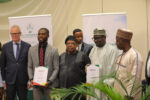
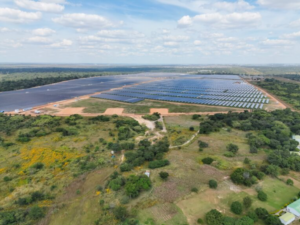
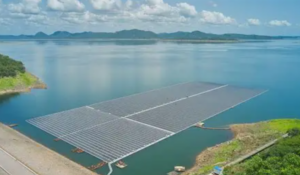
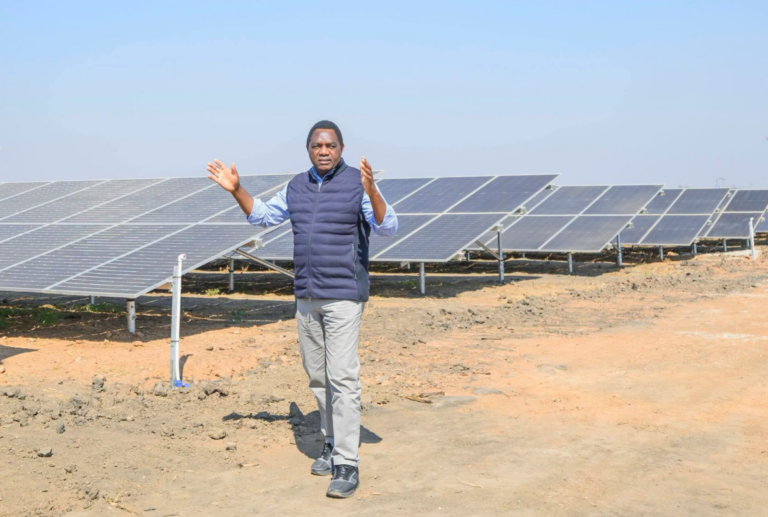
A second bank of solar panels went into service at Chisamba in Central Province on Tuesday, doubling the complex to 200 megawatts and making it the largest solar plant in Zambia. President Hakainde Hichilema commissioned the $75 million phase, built in seven months by Power China International for Kariba North Bank Extension Power Corporation, a ZESCO subsidiary. The utility’s managing director, Justin Loongo, put the construction workforce at 1,480, and the land came from Chief Chamuka of the Lenje, who has offered another 50 hectares for development.
Hichilema set the plant against a national target of 10,000 megawatts by 2030, noting that ZESCO has 800 megawatts of solar generation to date. He also pushed back on opposition claims that load-shedding has ended because a general election falls in August, saying the improvement follows the commissioning of several plants and that the government would keep building regardless of the electoral calendar. Central Province has passed its 400 megawatt provincial target and now sits at 437, its permanent secretary Milner Mwanakampwe told the ceremony.
Households were not waiting for the state to build. New polling by Afrobarometer finds 47% drawing electricity from a source other than ZESCO, and 83% of those relying on solar, which means a second electricity system has gone up privately while the first one was being repaired.
The national network reaches fewer homes than its footprint suggests. Afrobarometer puts the share of the population living inside ZESCO’s coverage area at 55%, yet only 28% say their house is connected. Among those with a connection, 15% report power that works most or all of the time. Roughly 4% of the country, on those numbers, has a grid supply it can depend on.
Behind both build-outs is the same failure. About 84% of national generation comes from hydropower, and successive dry years left the Kariba complex short of the water its turbines need, forcing long daily outages that pushed households and mines alike to secure their own supply. The government’s answer has been to build solar quickly and to open the market, letting private traders wheel electricity to willing buyers across ZESCO’s network under an open-access regime, which is what made the country’s recent merchant solar project financeable without a single state offtaker behind it.
Public opinion has moved with the meters. The same Afrobarometer round finds a majority in favour of ending ZESCO’s monopoly and putting public money into solar and wind, a marked shift in a country where the utility has been the single face of electricity for decades. Whether the state reaches 10,000 megawatts by 2030 will be settled long after August. What Chisamba and the rooftops already show is a country that has stopped treating one hydro-dependent utility as the whole of its power system.
Photo: Lusaka Times