
Kenya transmission PPP faces its first solvency test under the 2021 Act
KETRACO has submitted four privately initiated proposals worth up to Ksh65bn to the Public-Private Partnership Directorate for assessment. The Daily Nation reports that one consortium member has operated under a court order shielding it from liquidation since 2021, in a debt the company disputes and which remains before the courts.
Kenya’s Public-Private Partnerships Act of 2021 requires the PPP Directorate to satisfy itself that a proposer is neither insolvent nor subject to legal proceedings before an evaluation can proceed. That provision has rarely been tested at scale. It is about to be.
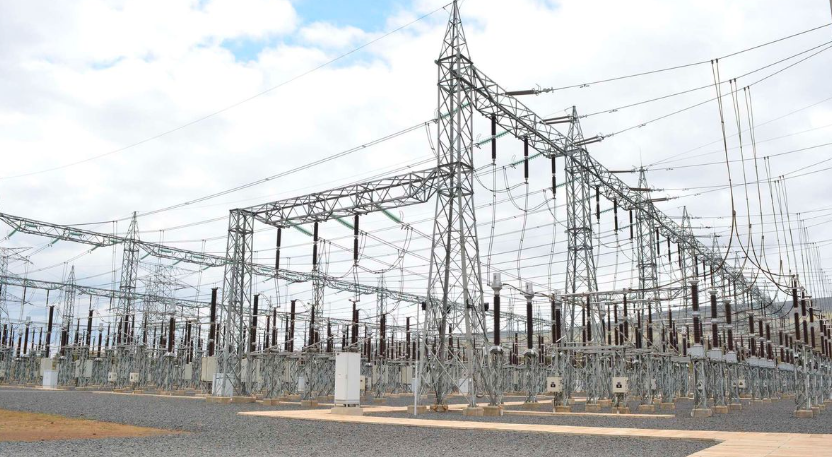
KETRACO has submitted four privately initiated proposals to the Directorate for assessment and approval, covering a Mutomo 220/132/33kV substation, a Voi 400/132/33kV substation with a 110km Voi-Taveta 132kV line, a 150km Rumuruti-Maralal 132kV line and a 132kV Sotik-Kilgoris line. The combined cost is put at between Ksh50bn and Ksh65bn, roughly $385m to $500m, with indicative implementation running from the 2027/28 to the 2030/31 financial years. They were submitted by a consortium of Pabari Investment Limited, ENCOMM Power Rental Solutions Limited and AEE Power Ventures S.L.
The Daily Nation has reported that Pabari Investments has operated since 2021 under a Mombasa High Court order preventing Absa Bank Mauritius from pursuing liquidation over a debt the company disputes. The Court of Appeal allowed a challenge to that ruling in December 2025, and the matter returned to the Mombasa High Court for mention on 30 July. Nothing has been determined either way, which is the position the Directorate now has to assess.
KETRACO’s own framing has been consistent throughout. Acting managing director Kipkemoi Kibias has said publication of the proposals does not constitute approval, and that due diligence will cover legal status, technical capability and financial capacity for each bid. Technical, financial and legal evaluation, stakeholder consultation and negotiation all sit ahead, alongside the affordability and value for money criteria the Act requires at financial close.
What sits behind the whole exercise is a number KETRACO has published itself. The utility puts its transmission financing gap at approximately $5bn, around Ksh650bn, against a network that has to carry geothermal from the Rift, wind from Turkana and hydro imported from Ethiopia to demand centres a long way from any of them. More than twenty transmission projects have been supported by development finance institutions since 2008, and the utility has said the country cannot keep borrowing at that pace.
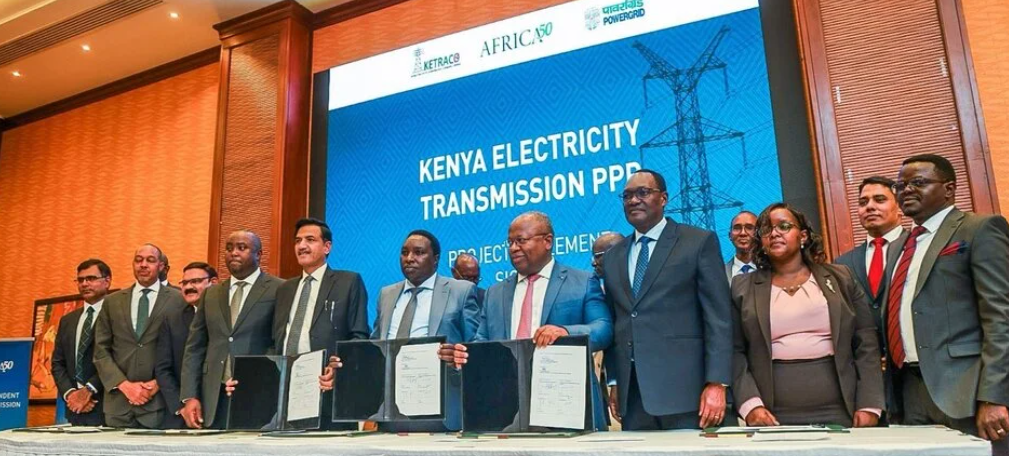
The alternative route has a working precedent and a discouraging clock attached to it. In December 2025 KETRACO signed a $311m partnership with Africa50 and the Power Grid Corporation of India covering roughly 180km of 400kV between Lessos and Loosuk and 72km of 220kV between Kibos, Kakamega and Musaga, intended in part as an alternative evacuation route for up to 300MW from Lake Turkana Wind Power. Africa50 brought that proposal in 2018, and signature followed seven years later.
For the financiers watching, the outcome that matters is not whether these four proposals proceed. It is whether the screening in front of them is visible and thorough enough that a serious sponsor would bring the next one. A route that clears proposals quickly attracts nobody, and a route that takes seven years attracts nobody either. Kenya needs the wires more than it needs either result.