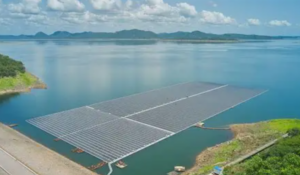

Botswana solar project secures $100m to sell into the Southern African Power Pool
Botswana’s first utility-scale solar plant has its financing, and the electricity is destined for the regional market rather than the domestic one. Rand Merchant Bank underwrote the package on a pure market view into SAPP, where the regional deficit sits at around 4,200MW and is concentrated in Zambia and the DRC.
Botswana’s first utility-scale solar plant has $100 million of financing behind it, and the electricity it produces is intended for sale across borders. The Tati project is being developed by Etavi Renewables, part of Shumba Energy, with commercial operation targeted for 2027.
Rand Merchant Bank put the package together. “We arranged and underwrote the entire financing package,” said Siyanda Mflathelwa, the bank’s head of infrastructure sector solutions, describing a structure built to be commercially viable at utility scale on a market view into the Southern African Power Pool rather than a single offtaker. Volumes traded on the pool’s day-ahead market rise as a result.
SAPP was established in 1995 and now serves twelve countries and more than 360 million people, allowing utilities and independent producers to sell across borders. Mining expansion, data centres and access programmes have all lifted regional demand at the same time as drought has cut hydropower output in countries including Mozambique and carbon-intensive plant has been retired.
The regional shortfall runs to around 4,200MW on RMB’s assessment, concentrated in Zambia and the Democratic Republic of Congo, while South Africa and Mozambique carry surplus. Both deficit markets hold the critical minerals that the next wave of computing demand depends on.
South Africa has as much as 53GW of new capacity due to come online by 2032, and RMB sees room for SAPP to integrate with the South African wholesale electricity market, which would sharpen price discovery and move surplus where it is short.
Botswana has been a net importer for years, dependent on purchased power and diesel through breakdowns at Morupule B. Its own targets are 15 per cent renewable by 2030, 36 per cent by 2036 and 50 per cent by 2040, with access having risen from 67.4 per cent of the population in 2017 to 76 per cent in 2023 on African Development Bank figures.
Tati is due in commercial operation in 2027.