Africa’s pension funds look to power its energy future
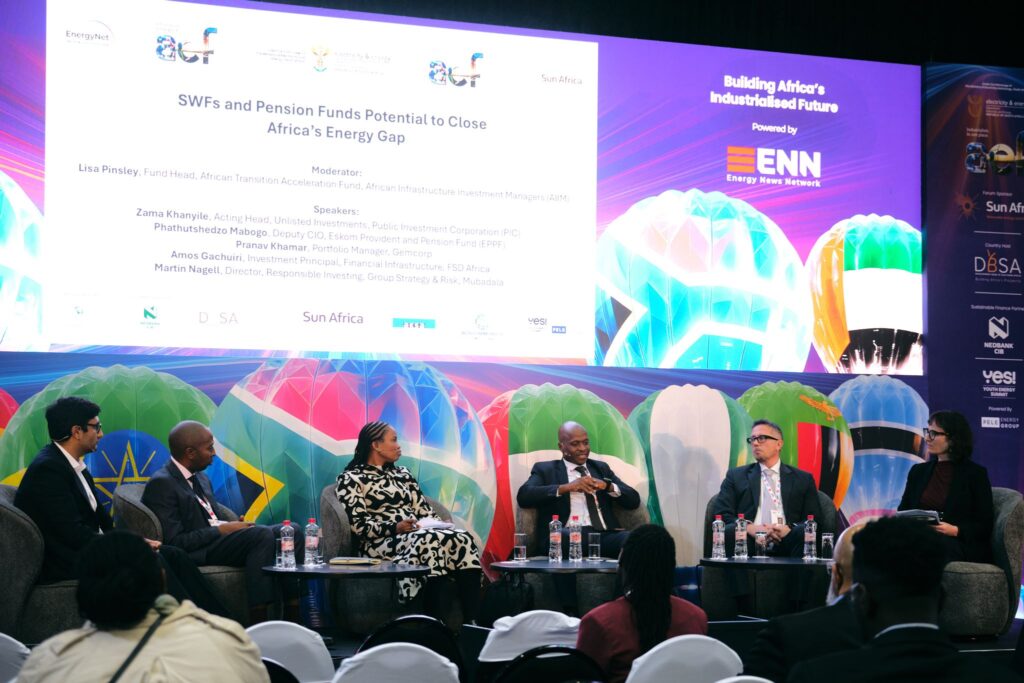
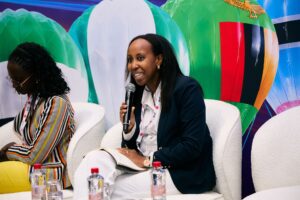
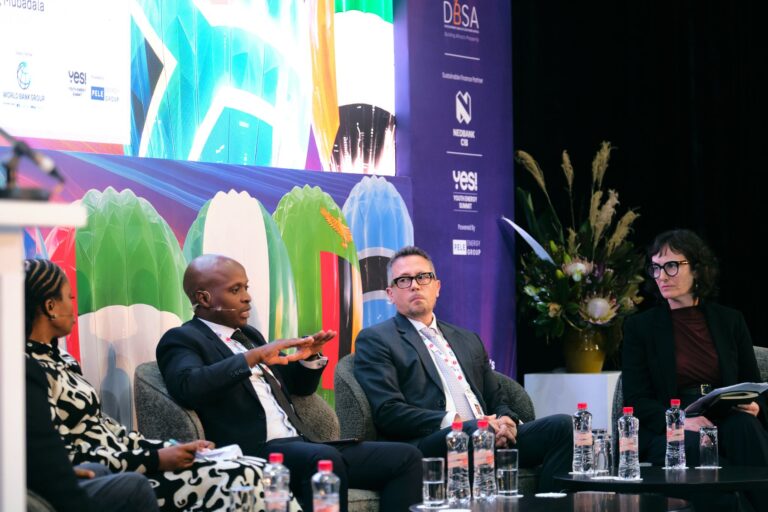
The capital to build Africa’s energy system is partly already on the continent, held in its pension and sovereign funds. At AEF, the Public Investment Corporation’s Zama Khanyile and the Eskom pension fund’s Phathutshedzo Mabogo set out why that money struggles to reach early-stage projects, and what would change it.
The money to build much of Africa’s energy future may already be on the continent. African pension funds, sovereign wealth funds and insurers hold vast pools of long-term capital, and at the Africa Energy Forum the argument was made that the task is not only attracting foreign investment, but moving that domestic institutional money off the sidelines and into energy.
The obstacle is rarely the size of the budget. It is that so few projects reach the point where a pension fund can safely commit. Zama Khanyile of South Africa’s Public Investment Corporation, the largest asset manager on the continent, described the gap her institution now tries to bridge from its own side. “Very few opportunities make it past feasibility steps and get to FID,” she said, referring to the final investment decision that turns a proposal into a fundable project, “so we’ve thought about closing the gap ourselves.” The point, she argued, is that capital alone achieves nothing without projects mature enough to receive it. “There’s no use having a big budget if we’re not doing anything to stimulate the earlier stages.”
For a pension fund the calculation carries a duty the money can never escape, since it belongs to members who will one day draw it down. Phathutshedzo Mabogo of the Eskom Pension and Provident Fund put the cross-border version of the problem plainly. “It’s easier getting money into a specific country, but getting it out is more difficult,” he said, describing the currency and repatriation risk that shapes where a fund can invest, “as a pension fund we have to get it back, too.”
That caution is not reluctance so much as responsibility, and it explains why the domestic capital everyone points to has been slow to move. The funds are managing other people’s retirements, and an early-stage energy project in a neighbouring market carries exactly the risks their mandates are written to avoid.
What the panel described is a set of tools being built to close that distance. Pranav Khamar of Gemcorp pointed to the oldest one there is, local knowledge, as the surest guard against the losses that make institutions wary. “Inevitably, things go wrong across all markets and the best tool is boots on the ground,” he said. Blended finance that takes the first loss, project preparation that carries proposals to bankability, and partners already on the ground are the machinery that lets a fund’s money reach where its mandate alone would never send it.
The prize is a continent financing more of its own transition. The capital exists, held in the funds of the countries that need the power, and the work now is building the bridges that let it cross to the projects. As Khanyile’s institution has concluded, the budget was never the hard part.